
© Andrew Brown/2024/China
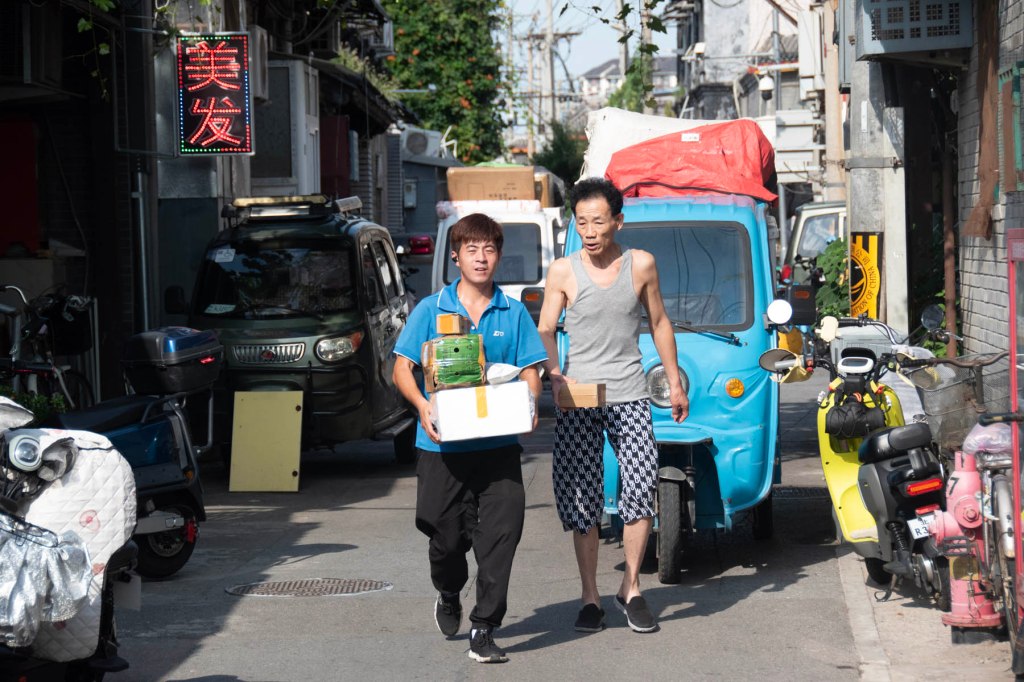
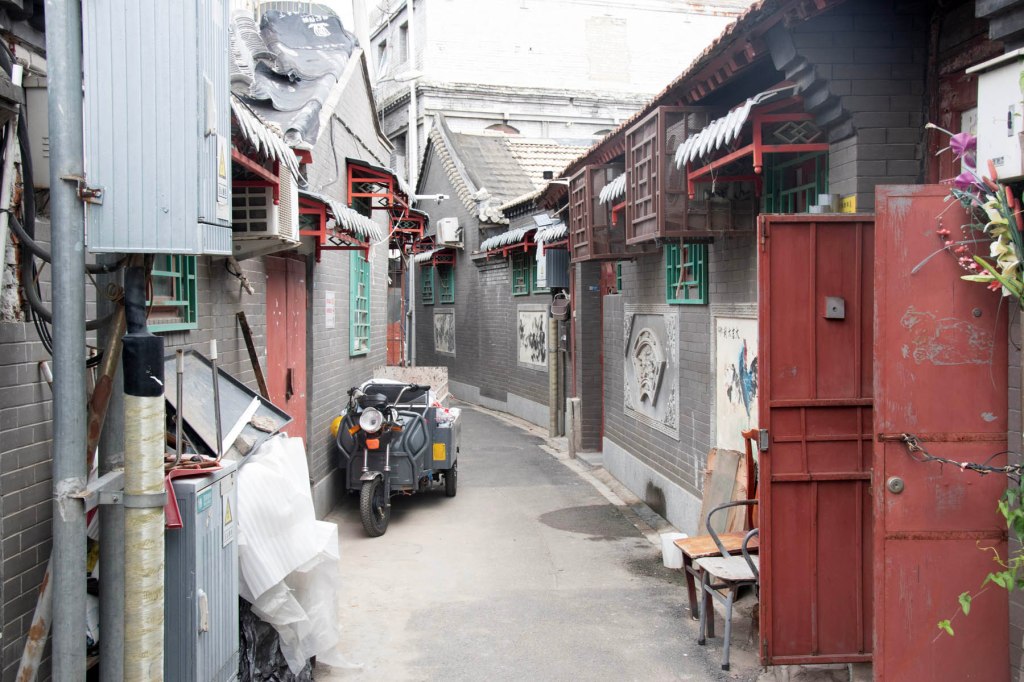
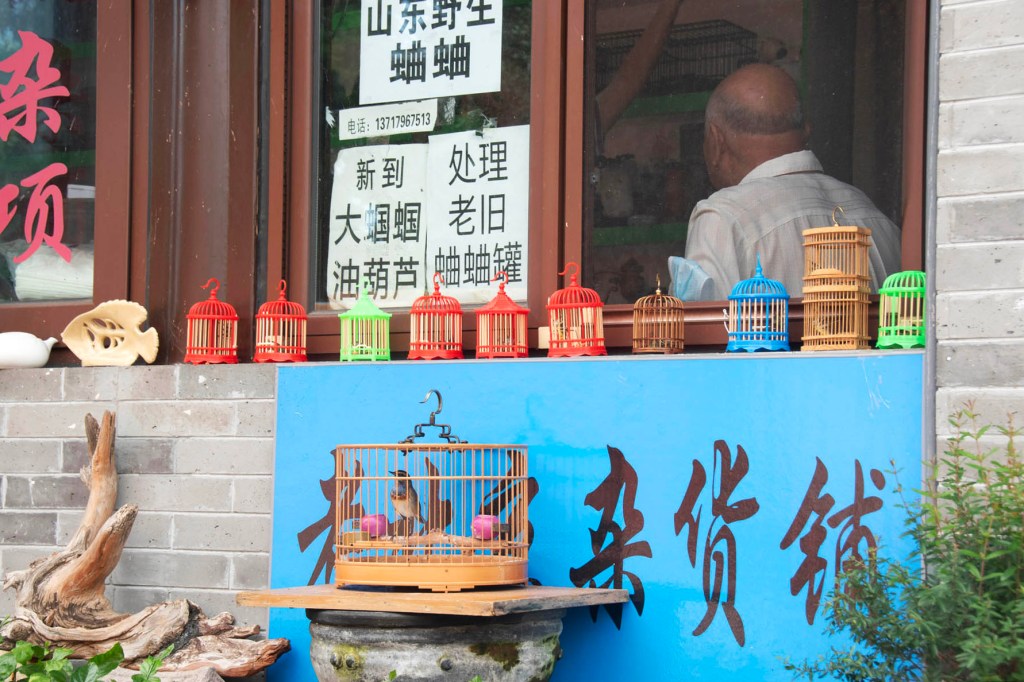
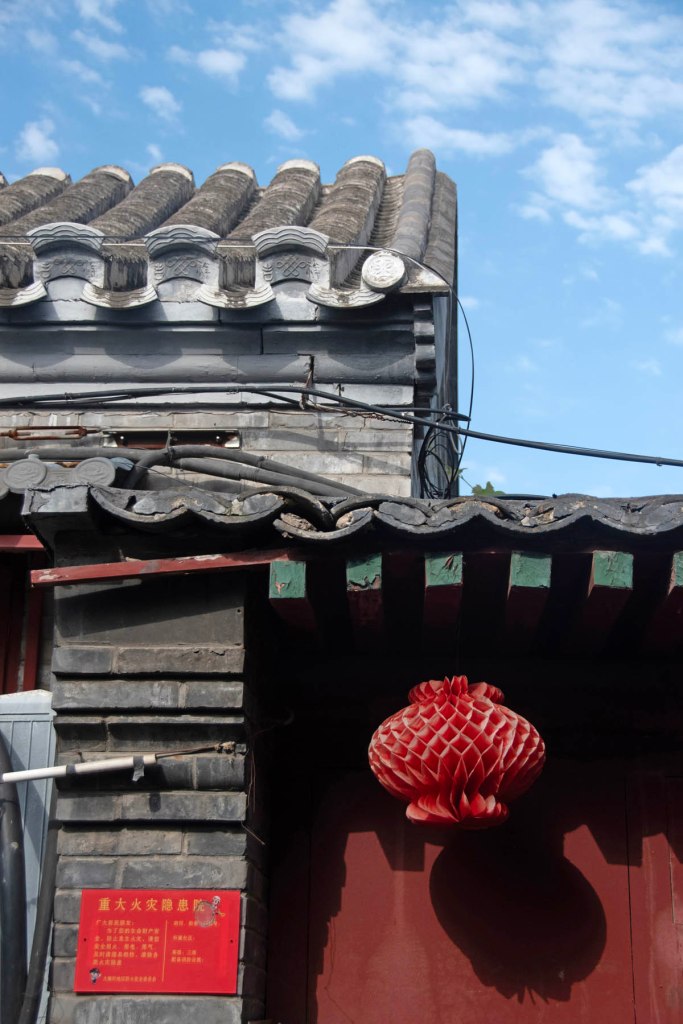
My favourite place to photograph in Beijing is the historic hutongs (alleyways) in the old town. Originally built by the Mongolian Yuan Dynasty in the Thirteenth Century, these narrow passages are filled with stone and tiled courtyard houses that once housed servants of the imperial palace and their families. Plain grey brick walls are interspersed with bright red doors with grinning lion head knockers and banners with good luck sayings on them in elegantly-painted Chinese characters. Behind these are courtyard houses, where several families or generations live communally. In the summer, older men hang around the doorways with their t-shirts rolled up over their stomachs in the so-called “Beijing bikini”, while brightly coloured birds chirp from overhead cages, hung below the eaves of houses.
There are different theories on the origin of the word hutong, but the most commonly accepted is that it derives from the Mongolian word for well, and indicates that the alleyway originally led to water – a scarce resource in Beijing’s dry and dusty climate. Once at risk of disappearing during Beijing’s early 2000s construction boom, the hutongs have been preserved by tourism, with many of the main streets converted into cafes, bars and antique shops. Go a few blocks back, however, and the old communities are still there.
Liulichang is my favourite hutong district so far. It’s just outside Zhengyangmen, old Beijing’s Main Gate, which used to divide the city into Mongolian and Chinese districts. Since the Ming Dynasty, it has been famous for scholars, painters and calligraphers, with different streets home to merchants catering to each one. This trade has continued to this day and on our first visit, we met one of the last craftsmen, Hu Cheng Ming. In his hutong house, he still makes calligraphy brushes in the traditional way from fox and civet tails.
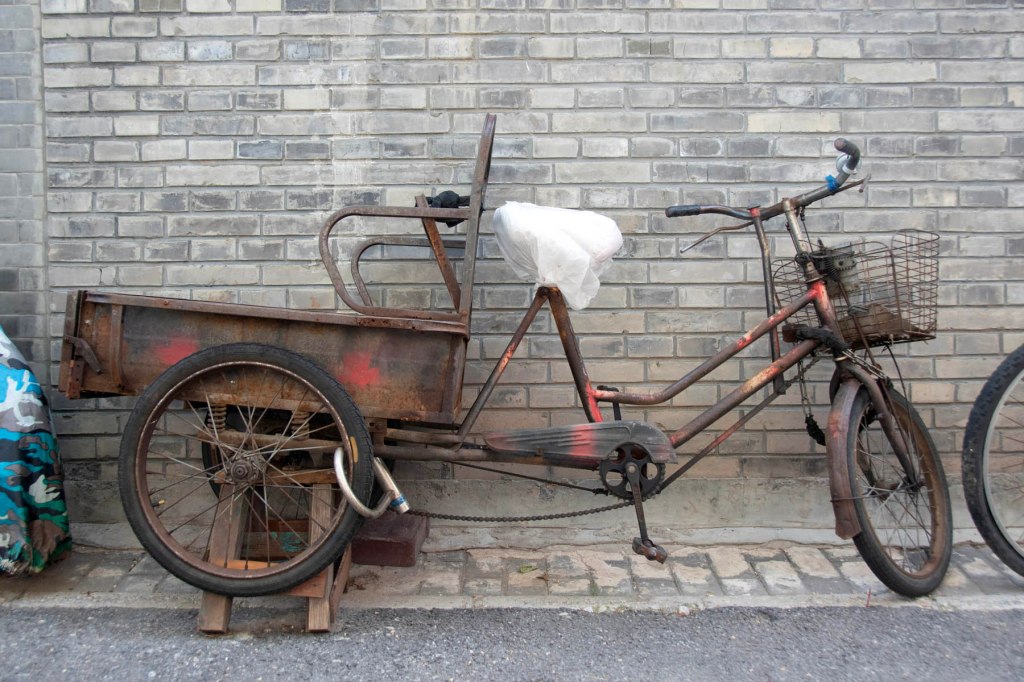
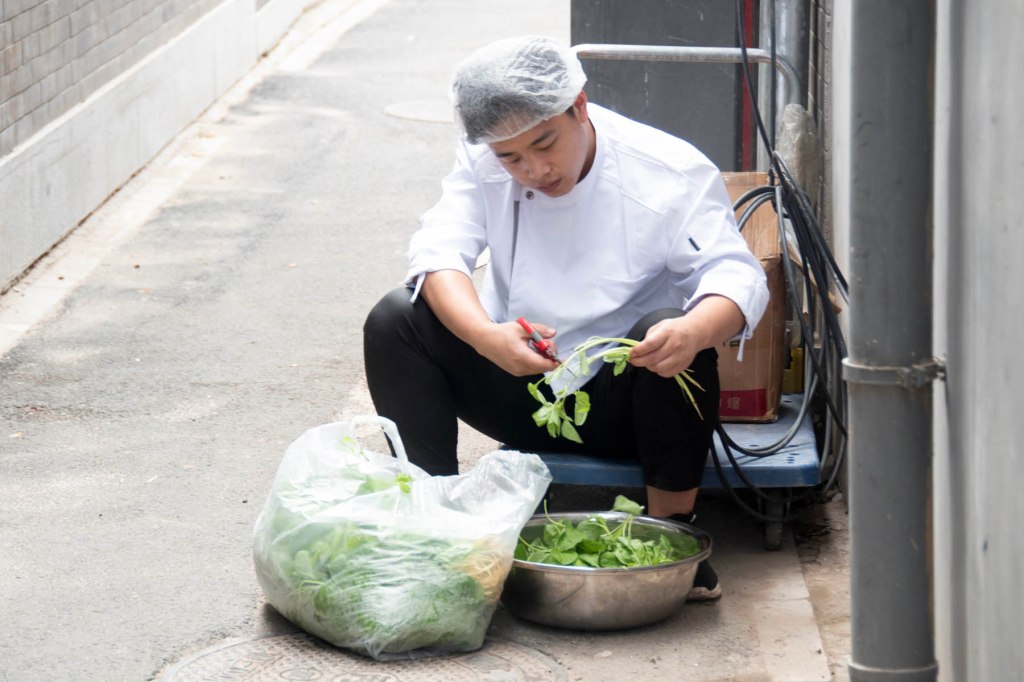
After doing the Liulichang tour with two families, including four children, I went back early one morning with Scott (the other dad). We wandered down random narrow side streets looking for interesting people and details to photograph. Then we stopped for some delicious baozi (dumplings) for breakfast.
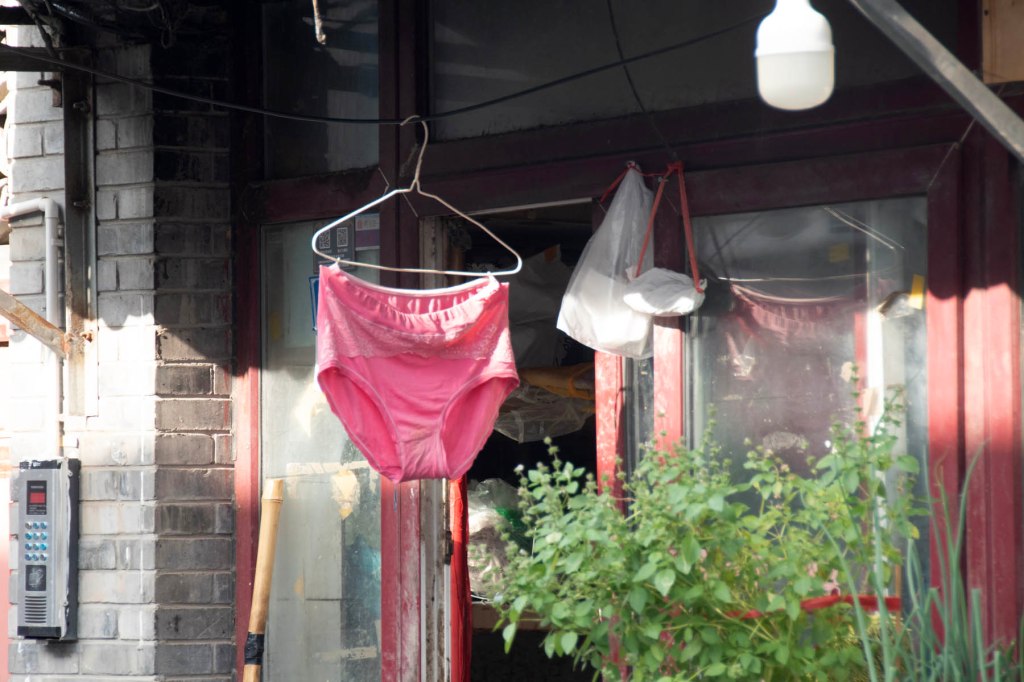
Here are some of my favourite photos from that trip:

© Andrew Brown/2024/China
© Andrew Brown/2024/China
© Andrew Brown/2024/China

© Andrew Brown/2024/China

© Andrew Brown/2024/China
© Andrew Brown/2024/China

© Andrew Brown/2024/China

© Andrew Brown/2024/China

© Andrew Brown/2024/China
© Andrew Brown/2024/China

© Andrew Brown/2024/China
© Andrew Brown/2024/China
© Andrew Brown/2024/China

© Andrew Brown/2024/China
© Andrew Brown/2024/China

© Andrew Brown/2024/China

© Andrew Brown/2024/China

© Andrew Brown/2024/China

© Andrew Brown/2024/China
Nanluoguxiang hutong
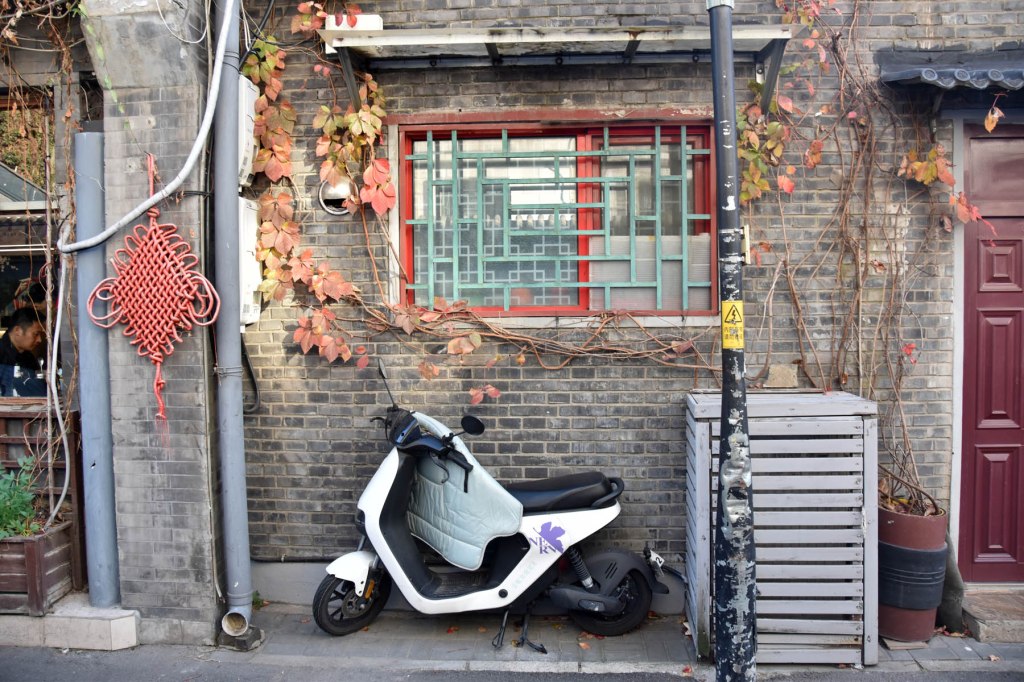
And here are a few photos from a later photo walk, in November, to a different hutong. This is Nanluoguxiang (or South Gong and Drum Lane) hutong, to the north of the Forbidden City. It’s one of Beijing’s oldest hutongs, dating back to the establishment of the Mongolian Yuan Dynasty, 800 years ago. On a map, it looks like a fish bone with a long main street of almost 1km, flanked by eight smaller alleyways on both sides. The bustling main street is full of bars, shops and restaurants, but the small side alleys are quieter and still lived in by local families.
© Andrew Brown/2024/China

© Andrew Brown/2024/China

© Andrew Brown/2024/China

© Andrew Brown/2024/China

 Beneath the Baobab
One thought on “Photos: Beijing’s historic hutongs”