Independence days: the new nation of Timor-Leste

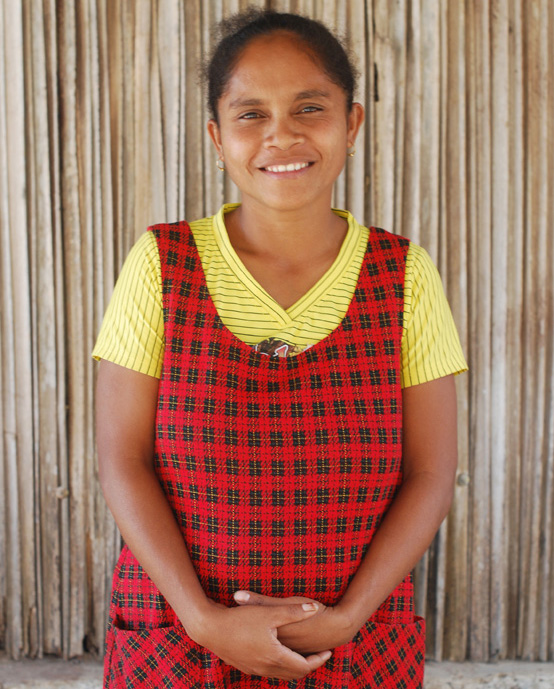
In the mornings, Neng helps her mum on the family food stall
© UNICEF/Indonesia 2012/Andy Brown

I’d only vaguely heard of Timor-Leste (or East Timor) before I went there last August. The tiny former Portuguese colony of just over a million people is most famous as the first new nation of the century. It achieved independence in 2002 after a long and bloody struggle with Indonesia, which invaded after the Portuguese left. The BBC describes the subsequent rebuilding of Timor-Leste as “one of the UN’s biggest success stories” so it was fascinating to visit with UNICEF, the UN Children’s Fund.

Continue reading “Independence days: the new nation of Timor-Leste”
Welcome Obama: making history in Myanmar

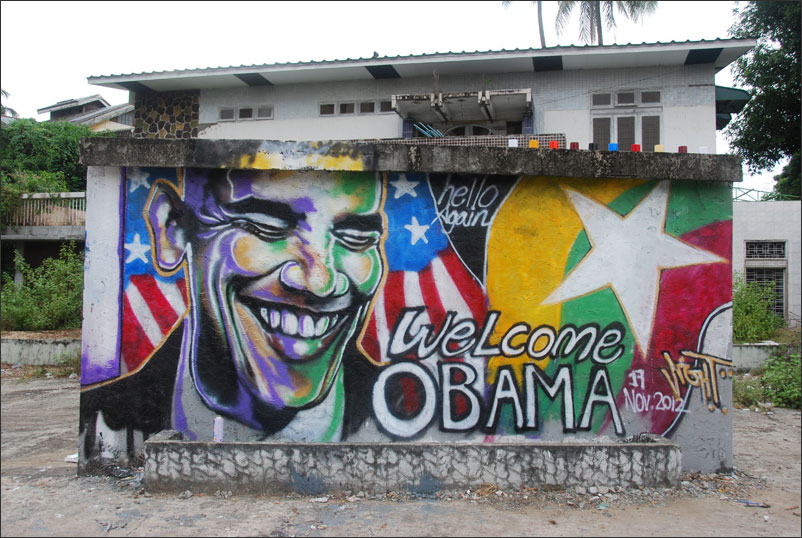
‘Welcome Obama’ graffiti on the roadside opposite my Yangon hotel
© Andy Brown/Myanmar 2012

I always seem to be visiting Myanmar (previously Burma) at historic moments. On my first visit in June, Aung San Suu Kyi was visiting London for the first time in 24 years. On my second in November, Barack Obama was making the first visit to the country by a serving US President. On the street opposite my hotel, a large ‘Welcome Obama’ graffiti mural had sprung up, and the papers were full of the news. ‘From Sanctions to Success’ claimed the headline of the Myanmar Times, with articles inside ranging from sober analysis of the visit to a fortune teller’s predictions for Obama’s second term. Whatever else, Myanmar remains a deeply superstitious country.

Continue reading “Welcome Obama: making history in Myanmar”

A stitch in time: street children learn a trade

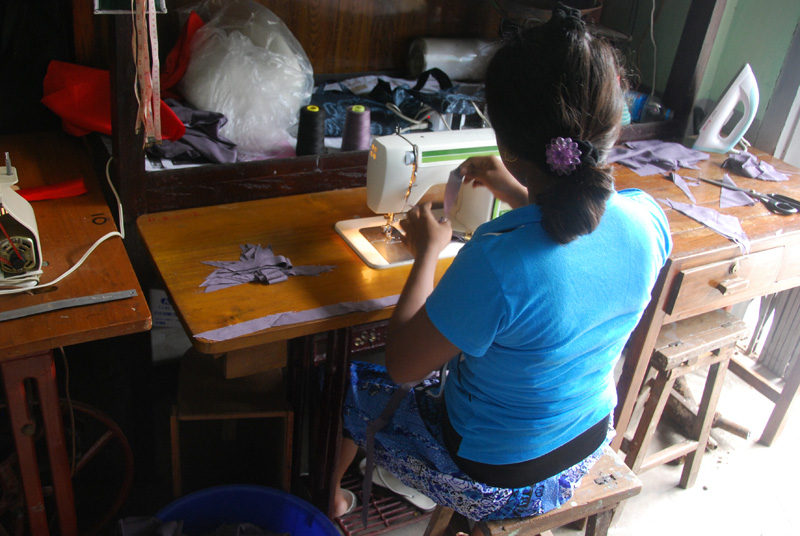
Thanda sews a shirt during the vocational training offered to street children
© UNICEF Myanmar/2012/Andy Brown

Sixteen-year-old Thanda* has spent much of her life living and working on the streets of Yangon, capital of Myanmar (also known as Rangoon, Burma). She is a a Burmese of ethnic Indian descent: a small, serious teenager in a blue polo shirt and traditional longyi skirt.

Thanda’s father is a manual labourer and her mother is a washer woman. She has seven siblings. When the family earns enough, they live in bamboo hut outside town. But other times they can’t afford the rent and have to live on the streets. “I used to pick up garbage with my brothers,” she told me when I met her at a drop-in centre for street children. “We would sell plastic bottles to junk shops for 2 to 4 dollars a day. I never went to school and I didn’t know how to look after my health.”

Continue reading “A stitch in time: street children learn a trade”

Coping with tragedy: the legacy of war in Laos

Peter Kim, a young bomb survivor, at the COPE centre
© UNICEF/Laos 2012/Andy Brown

Peter Kim is a victim of the Vietnam War. But he’s not a Vietnamese or American veteran; he’s a 20-year-old Lao youth living in Vientiane. Four years ago he lost both his hands and eyesight to one of the millions of unexploded bombs that still litter the Laos countryside almost four decades after the war ended.

Peter Kim grew up in a small rural village in Viangchan province, where his father grew rice and kept cows and buffalos. “On my sixteenth birthday, I went to school for an exam,” he told me. “I came home with my friend. On the way back, my friend saw something on the ground. He picked it up to show me. I tried to open it and that’s when it exploded. It happened very fast. Afterwards I couldn’t see or hear anything.”

Continue reading “Coping with tragedy: the legacy of war in Laos”

Special delivery: Timorese women give birth safely

Isabelle wants to deliver her fifth child at a health centre
© UNICEF Timor-Leste/2012/Andy Brown

Isabelle de Santos, 29, lives in Suku (village) Hatólia in Ermera district, Timor-Leste. Her husband is a coffee farmer. She already has four children aged six to 12-years old, and is four months pregnant with her fifth. “I’m hoping it will be a boy so he can help his father in the fields,” she says, laughing.

Suku Hatólia is part of a new initiative that encourages women to give birth at their nearest health centre. After a meeting with her local community, Isabelle signed up. “I don’t want to suffer or die giving birth,” she says. “Now, when I go into labour we can call the health centre and they will send the ambulance to collect me. I’m very happy to know they will come.”

Continue reading “Special delivery: Timorese women give birth safely”

Water of life: villages in Timor-Leste get sanitation

Francisca Martinez with her niece, 18-month old Luciana
© UNICEF Timor-Leste/2012/Andy Brown

Francisca Martinez lives in Suku (village) Estado, high in the mountains of Ermera district in Timor-Leste. She doesn’t know her age exactly but guesses around 30. She has two teenage children of her own and helps look after her sister’s young children. “All the families round here are coffee farmers,” she says. “We earn up to $500 a year selling sacks of beans to an American company. We also keep pigs and chickens and grow corn to eat.”

Continue reading “Water of life: villages in Timor-Leste get sanitation”

Between two worlds: diving in Malapascua

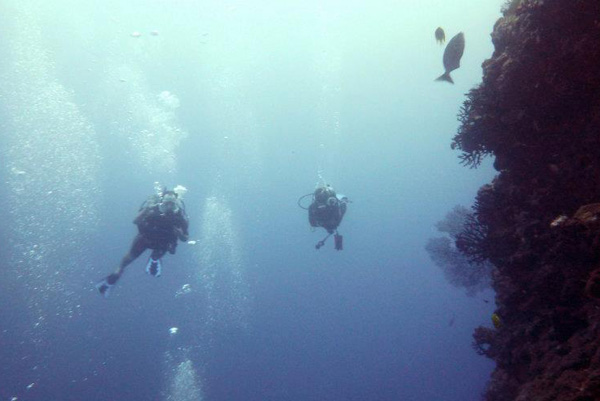
Me (left) diving in Papua New Guinea in March
© Thierry Dardare/2012

There’s something astonishing about stepping out of one world and into another. I’m reading a book about the moon landings and in many ways it reminds me of diving, the key difference being the speed of the transition. With diving, you kit up and step off the back of a boat, and within minutes you’re weightless and submerged. The world of ocean surface, boats and islands is replaced by an alien, underwater realm of iridescent coral, shoals of brightly coloured fish and – if you’re lucky – a huge thresher shark gliding through the blue haze.

Continue reading “Between two worlds: diving in Malapascua”

Opening up: visiting Burma at a time of change

A stall selling Aung San Suu Kyi t-shirts at Bogyoke market
© Andy Brown/Myanmar 2012

While Aung San Suu Kyi was visiting London for the first time in 24 years, I was in Yangon, Myanmar (previously known as Rangoon, Burma). It was a fascinating time to visit, with the country just starting to open up politically and economically. On the drive from the airport to the hotel, I passed several street vendors openly selling t-shirts of ‘The Lady’, an activity which two years previously would have landed them in jail.

Although it’s less than 600km from Bangkok, Rangoon felt like a different world, or at least a different time. Most people – both men and women – still wear the traditional longhi, a sarong-like wrap-around skirt made from a tube of fabric that you step into. In Thailand, this is now only seen on formal occasions. Women and children also covered their cheeks, nose and forehead in coloured chalk. Initially I assumed this had cultural or religious significance, but I was wrong. “It’s actually cosmetic,” my colleague Ye Lwin explained.

Continue reading “Opening up: visiting Burma at a time of change”

Ugly duckling: eating balut in the Philippines

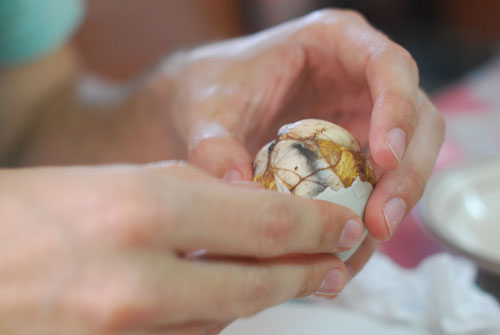
Peeling a fertilised balut egg, while trying to hold down my nausea
© Marge Francia/2012/Philippines

Balut is probably South East Asia’s most gruesome delicacy. It’s a fertilized duck egg with a half-grown embryo that is boiled alive and eaten whole. For Filipinos, balut is a treat. They buy it from street vendors or in local restaurants and bars, where it is served as a drinking snack, much like salted peanuts in British pubs. Inside the shell is a curled up foetus that looks like something out of an Alien horror movie or one of Gunther von Hagens’ Body Worlds exhibitions. Filipino children will cheerfully crunch their way through the foetal bones and feathers but just the thought of it makes me feel ill.

Continue reading “Ugly duckling: eating balut in the Philippines”

Pirates of the Pacific: colonial history in Cebu

A painting at the Basilica del Santo Nino, showing an idealised view of colonial history
© Andy Brown/Philippines 2012

From a European perspective, the history of the Philippines began abruptly in 1521 with the arrival of the Portuguese conquistador Ferdinand Magellan. Like Christopher Columbus before him, Magellan was a mercenary on hire to the King of Spain. His mission was to find a new trade route to the Spice Islands by heading west from Europe via the Spanish colony of Mexico, handily avoiding the Portuguese navy, which controlled the Eastern route around Africa.

Continue reading “Pirates of the Pacific: colonial history in Cebu”