Treasure island: exploring Jakarta's boat docks

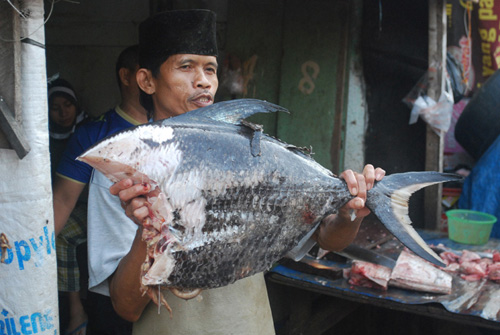
A market trader displays his scaly wares at Jakarta’s fish market.
© Andy Brown/2011/Indonesia

I was warned about Jakarta. ‘It’s polluted, dangerous and characterless,’ everyone said. Even the Lonely Planet calls it “a hard city to love”, noting the “relentless urban sprawl”. Yet now that I’m here I find myself liking the place, somewhat to my own surprise. It’s true that the traffic is terrible. In the mornings it takes me 15 minutes to get to the UNICEF office on foot – or 30 minutes in a ‘taksi’. The roads are solid with cars, although a tide of motorbikes makes its way through, flowing between the cars or racing along pavements three abreast. Travelling by foot, you have to dodge these same motorbikes and breathe in their exhaust. You also have to cope with the intense heat, which I managed by staying in the shade of the skyscrapers.

Continue reading “Treasure island: exploring Jakarta's boat docks”
In the mood for love: Maggie Cheung and children

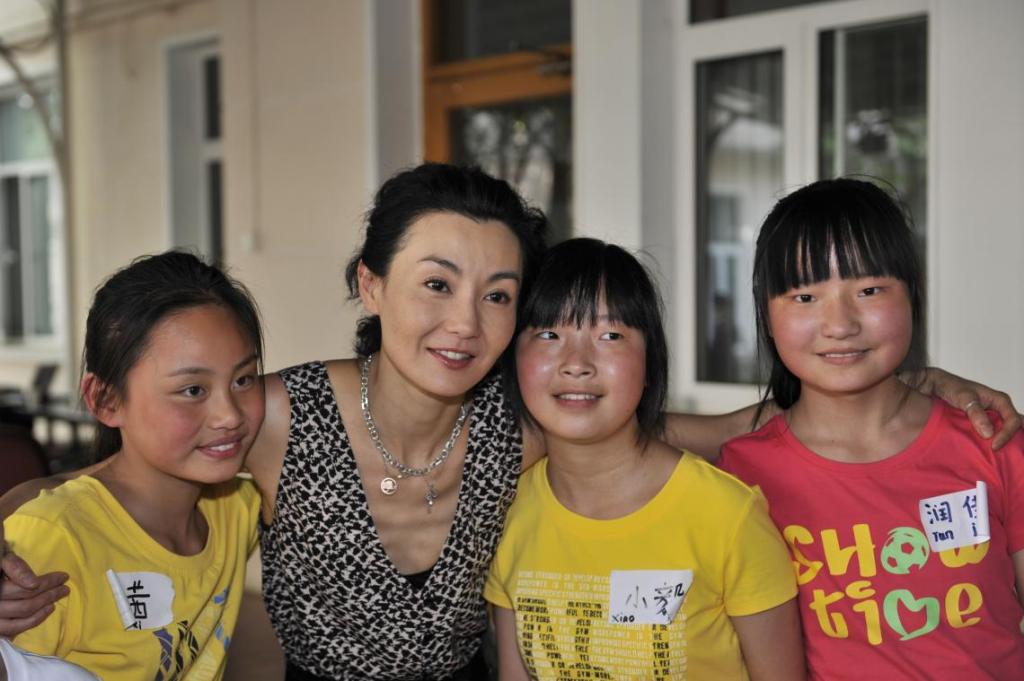
Maggie Cheung and the young presenters, including Xi-xi (far left).
© UNICEF/China/2010/Martin Ye 

Note: This blog post was written in 2011. In 2021, China announced the eradication of extreme poverty in the country, having lifted nearly 800 million people out of poverty.

Child poverty is not solely a problem for poor countries. Although China is now the world’s second largest economy, having overtaken Japan in February, its spectacular economic growth has not yet fully reached the poorest children and communities. There are still 100 million children living on less than $2 a day, with stark disparities between urban and rural areas.

Continue reading “In the mood for love: Maggie Cheung and children”

Return of the King: Nepal's royal capitals

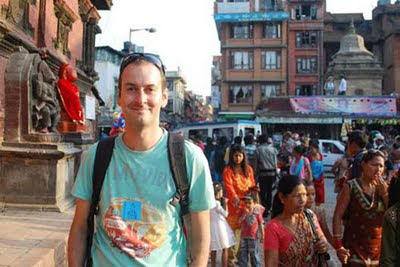
The author in Patan’s Durbar Square. © Joyce Lee/2011/Nepal

Nepal is both one of the most beautiful countries in the world, and one of the poorest. In the capital Kathmandu, both the beauty and poverty are very much on display. The city is an odd mixture of historic grandeur and modern squalor. Its medieval buildings and squares have remained unchanged for centuries. Houses, temples and palaces are all adorned with beautiful and intricate wood carvings, which cover doors, windows, pillars and rafters. Stone lions guard the dusty, potholed streets and crumbling buildings. Sacred cows wander unhindered among the tractors, rickety vehicles and women carrying baskets on their heads. There is a Hindu temple on almost every street corner and square, from small shrines to local spirits and sacred trees, to huge towering monuments to the major Hindu deities Shiva and Vishnu. And it is all marvelously intact – there are no office blocks, shopping malls or multi-story car parks to disrupt the historic skyline.

Continue reading “Return of the King: Nepal's royal capitals”

China: Back in the P.R.C.

The author hiking on the Great Wall of China in 2011
© Andy Brown/2011/China

In 1876, Gore Vidal’s historical novel about the US centenary, narrator Charlie Schuyler returns to New York after decades of self-imposed exile in Europe. He is struck by the transformation of a city he once knew into something brash, modern and unfamiliar, as America rushed to catch up with and surge past the global powers of the Old World. I got a bit of the same feeling returning to Beijing after a ten-year absence (I first visited on a Great Wall hiking trip in 2002).

Driving into town, the horizon was a jumble of skyscrapers and tower blocks, stretching out from East to West with barely a sliver of sky between them. Everything was clean and orderly, with neat rows of silver birch trees lined up behind spotless pavements and well-managed cycle lanes. The tiled ‘hutong’ houses and bicycle-drawn carts I remembered from my last visit were nowhere to be seen. As the light began to fade, we reached the embassy district where Western brand names, neon-lit Chinese characters and a huge Apple logo lit up the sky above a brand new shopping mall. There was even a billboard for a Bob Dylan gig at the Workers’ Gymnasium. It felt more like Geneva than the hectic and historic Asian city I remembered.

Continue reading “China: Back in the P.R.C.”