The dark of day: life in a Jakarta urban slum

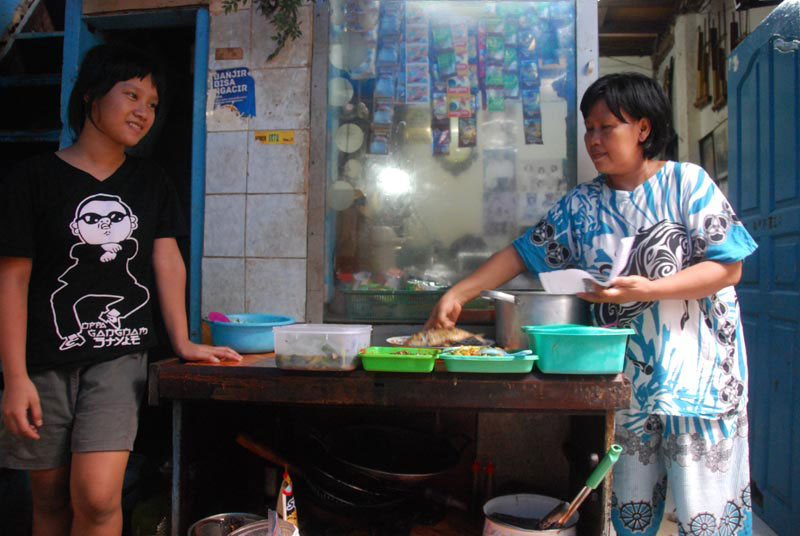
In the mornings, Neng helps her mum on the family food stall
© UNICEF/Indonesia 2012/Andy Brown

Neng is fourteen years old. She lives and works on Venus Alley, a lane in the notorious Jembatan Besi slum in Jakarta, Indonesia. Unlike other children her age, she rarely gets to see the sun. The slum is one of the most densely populated in Indonesia, rising to four stories in places. The ground floor homes are reasonably well constructed but as they ascend, they become increasingly makeshift, with walls and floors made from wood and scrap metal.

Continue reading “The dark of day: life in a Jakarta urban slum”

Independence days: the new nation of Timor-Leste

In the mornings, Neng helps her mum on the family food stall
© UNICEF/Indonesia 2012/Andy Brown

I’d only vaguely heard of Timor-Leste (or East Timor) before I went there last August. The tiny former Portuguese colony of just over a million people is most famous as the first new nation of the century. It achieved independence in 2002 after a long and bloody struggle with Indonesia, which invaded after the Portuguese left. The BBC describes the subsequent rebuilding of Timor-Leste as “one of the UN’s biggest success stories” so it was fascinating to visit with UNICEF, the UN Children’s Fund.

Continue reading “Independence days: the new nation of Timor-Leste”

Welcome Obama: making history in Myanmar

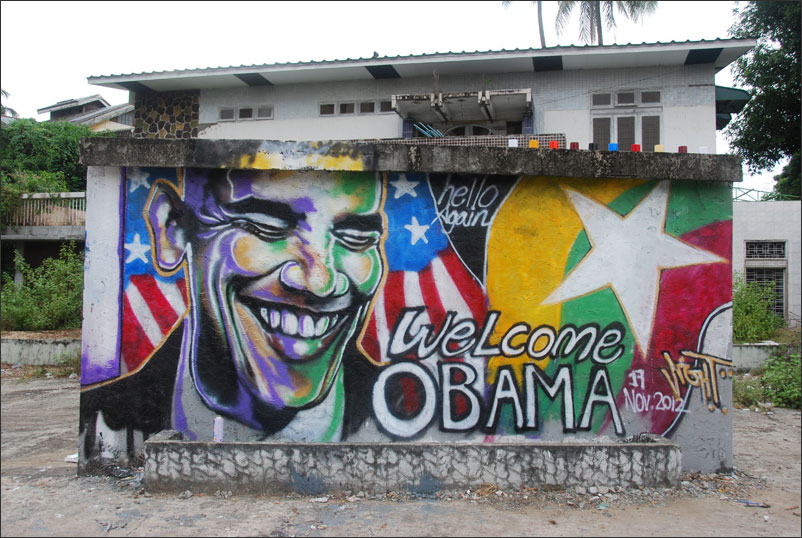
‘Welcome Obama’ graffiti on the roadside opposite my Yangon hotel
© Andy Brown/Myanmar 2012

I always seem to be visiting Myanmar (previously Burma) at historic moments. On my first visit in June, Aung San Suu Kyi was visiting London for the first time in 24 years. On my second in November, Barack Obama was making the first visit to the country by a serving US President. On the street opposite my hotel, a large ‘Welcome Obama’ graffiti mural had sprung up, and the papers were full of the news. ‘From Sanctions to Success’ claimed the headline of the Myanmar Times, with articles inside ranging from sober analysis of the visit to a fortune teller’s predictions for Obama’s second term. Whatever else, Myanmar remains a deeply superstitious country.

Continue reading “Welcome Obama: making history in Myanmar”

A stitch in time: street children learn a trade

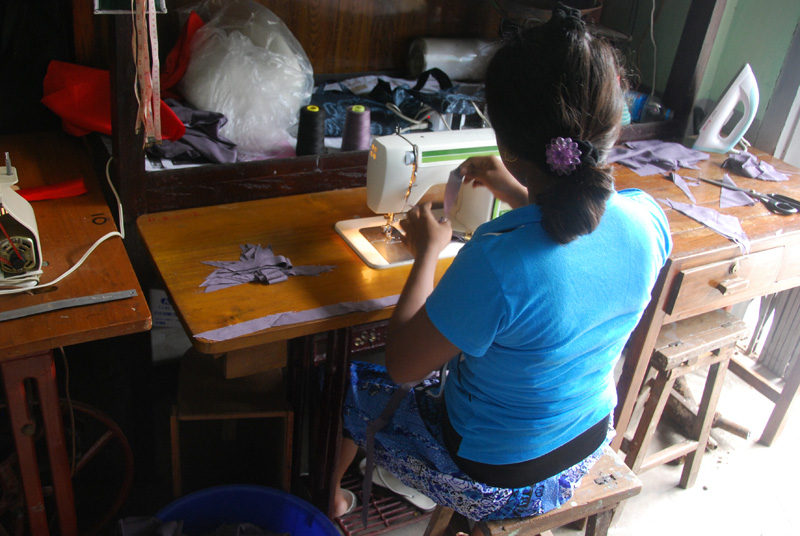
Thanda sews a shirt during the vocational training offered to street children
© UNICEF Myanmar/2012/Andy Brown

Sixteen-year-old Thanda* has spent much of her life living and working on the streets of Yangon, capital of Myanmar (also known as Rangoon, Burma). She is a a Burmese of ethnic Indian descent: a small, serious teenager in a blue polo shirt and traditional longyi skirt.

Thanda’s father is a manual labourer and her mother is a washer woman. She has seven siblings. When the family earns enough, they live in bamboo hut outside town. But other times they can’t afford the rent and have to live on the streets. “I used to pick up garbage with my brothers,” she told me when I met her at a drop-in centre for street children. “We would sell plastic bottles to junk shops for 2 to 4 dollars a day. I never went to school and I didn’t know how to look after my health.”

Continue reading “A stitch in time: street children learn a trade”

Coping with tragedy: the legacy of war in Laos

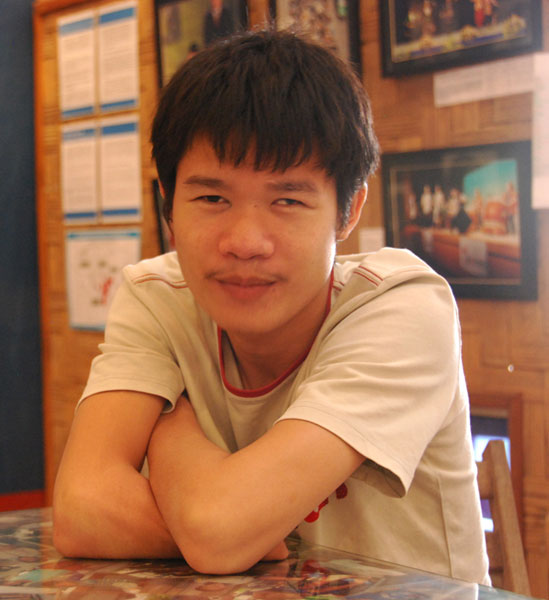
Peter Kim, a young bomb survivor, at the COPE centre
© UNICEF/Laos 2012/Andy Brown

Peter Kim is a victim of the Vietnam War. But he’s not a Vietnamese or American veteran; he’s a 20-year-old Lao youth living in Vientiane. Four years ago he lost both his hands and eyesight to one of the millions of unexploded bombs that still litter the Laos countryside almost four decades after the war ended.

Peter Kim grew up in a small rural village in Viangchan province, where his father grew rice and kept cows and buffalos. “On my sixteenth birthday, I went to school for an exam,” he told me. “I came home with my friend. On the way back, my friend saw something on the ground. He picked it up to show me. I tried to open it and that’s when it exploded. It happened very fast. Afterwards I couldn’t see or hear anything.”

Continue reading “Coping with tragedy: the legacy of war in Laos”

Special delivery: Timorese women give birth safely

Isabelle wants to deliver her fifth child at a health centre
© UNICEF Timor-Leste/2012/Andy Brown

Isabelle de Santos, 29, lives in Suku (village) Hatólia in Ermera district, Timor-Leste. Her husband is a coffee farmer. She already has four children aged six to 12-years old, and is four months pregnant with her fifth. “I’m hoping it will be a boy so he can help his father in the fields,” she says, laughing.

Suku Hatólia is part of a new initiative that encourages women to give birth at their nearest health centre. After a meeting with her local community, Isabelle signed up. “I don’t want to suffer or die giving birth,” she says. “Now, when I go into labour we can call the health centre and they will send the ambulance to collect me. I’m very happy to know they will come.”

Continue reading “Special delivery: Timorese women give birth safely”

Water of life: villages in Timor-Leste get sanitation

Francisca Martinez with her niece, 18-month old Luciana
© UNICEF Timor-Leste/2012/Andy Brown

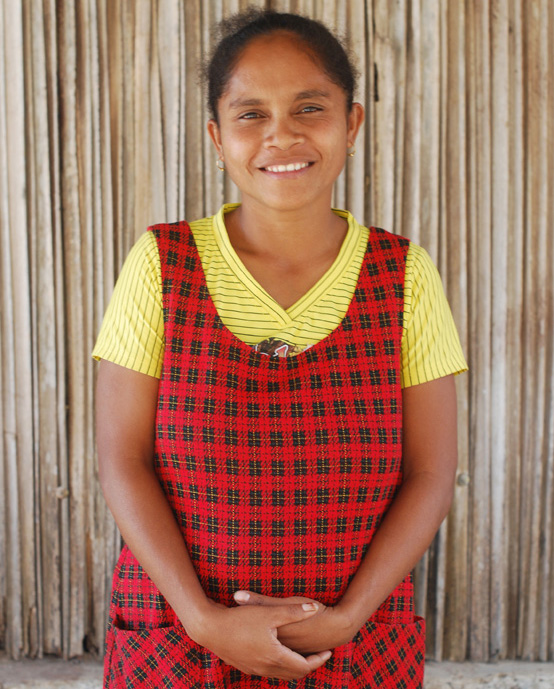
Francisca Martinez lives in Suku (village) Estado, high in the mountains of Ermera district in Timor-Leste. She doesn’t know her age exactly but guesses around 30. She has two teenage children of her own and helps look after her sister’s young children. “All the families round here are coffee farmers,” she says. “We earn up to $500 a year selling sacks of beans to an American company. We also keep pigs and chickens and grow corn to eat.”

Continue reading “Water of life: villages in Timor-Leste get sanitation”

Road to recovery: children go back to school

Ten year old Joy hugs her grandfather at the evacuation centre.
© UNICEF Philippines/2012/Andy Brown

Ten-year-old Crizelle Joy lives with her grandfather, sister, two aunts and uncles, and nephew in a small one-room hut at an evacuation centre in Barangay (village) Mandulog in Iligan, the Philippines. The village is right next to the river and was one of the worst affected by the flash floods that followed Tropical Storm Washi in December.

“We were asleep in our house when the flood came,” Joy remembers. “The Barangay Captain woke us up. He was going from house to house in a bamboo boat. We had to leave immediately. My grandfather brought blankets for me and my sister but we left everything else behind. I was very scared. It was dark and the water was rising, and I could hear people crying out for help.

Continue reading “Road to recovery: children go back to school”

Relocation, relocation: families living in tent cities

Children use an umbrella to shelter from the sun at the tent city.
© UNICEF Philippines/2012/Andy Brown

I was in the Philippines recently to see how UNICEF was helping children in the aftermath of Tropical Storm Sendong, which hit the southern island of Mindanao last December. This was the worst storm in the area in modern history, dropping the equivalent of a month’s rainfall in just one day and causing flash floods which left thousands of families homeless.

After my morning visit to Barangay Carmen evacuation centre (see part one of this blog), we returned to ‘Alpha Base’, the temporary UNICEF office in Cagayan de Oro (CdO). In fact it was a rented house in a residential compound, with a UNICEF banner hung from an upstairs balcony. Here I met Phil, a bubbly communications specialist from New Zealand who was my main contact for the trip, as well as Love, a friend of mine from the Manila office who had volunteered to work in CdO, and Rohannie, a child protection officer who I was due to accompany on her afternoon rounds.

Continue reading “Relocation, relocation: families living in tent cities”

Peer to peer: children recover from disaster

Kim helps six-year-old Robin with a math lesson, at an evacuation centre.
© UNICEF Philippines/2012/Andy Brown

Seventeen year old Kim sits with a group of young children in a child-friendly space at an evacuation centre in Cagayan de Oro, the Philippines, one of the towns worst hit by Tropical Storm Sendong last December. The centre is in a barangay (village) covered court. It’s crowded and humid, with the smell of sweat. Over 130 families live on top of each other with little comfort or privacy – sleeping, cooking and washing in the open.

But this morning an area has been cleared for children, marked out by a UNICEF tarpaulin mat. Here, Kim and other young volunteers are teaching math. “What does five plus two equal?” Kim asks in English, holding up a piece of paper with numbers drawn on it inside different shapes. “Seven!” the children shout happily in unison, before colouring in the right number with a yellow crayon.

Continue reading “Peer to peer: children recover from disaster”