Beijing’s historic hutongs (part two)

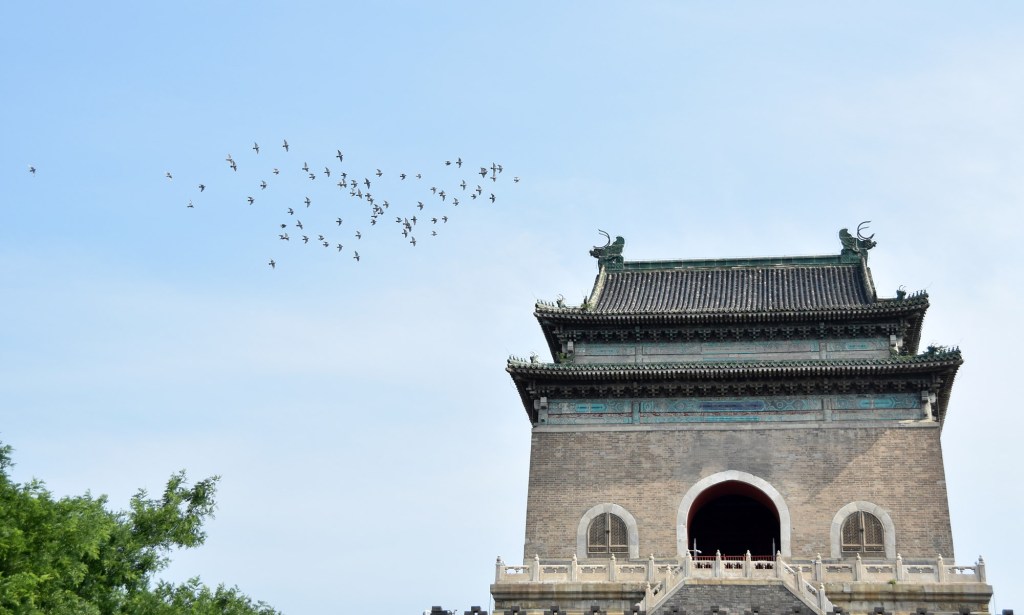
A flock of birds fly over the Bell Tower in the heart of old Beijing.
© Andrew Brown/2025/China

This year, I’ve continued to explore Beijing’s historic hutongs. My first photo walk of the year was in May, with some friends from work. We started early at the Bell and Drum Towers, which were used in imperial times to announce the time of day. From the towers, we explored the narrow side streets, looking for interesting details of local life. Although this can be a busy tourist area later in the day, at 8am on a Sunday morning the square between the two towers is mainly used by local people for exercise. We saw groups of older people practicing tai chi, some of them in traditional costumes and armed with fencing swords or spears. Others performed a colourful ribbon dance, swirling long strips of fabric around in time to Chinese pop music from a portable stereo.

Continue reading “Beijing’s historic hutongs (part two)”

Photos: Beijing’s historic hutongs

A classic hutong scene: these red doors and lion-head doorknockers are widespread. People often leave the doors open, allowing you to glimpse the communal courtyard houses inside.
© Andrew Brown/2024/China

My favourite place to photograph in Beijing is the historic hutongs (alleyways) in the old town. Originally built by the Mongolian Yuan Dynasty in the Thirteenth Century, these narrow passages are filled with stone and tiled courtyard houses that once housed servants of the imperial palace and their families. Plain grey brick walls are interspersed with bright red doors with grinning lion head knockers and banners with good luck sayings on them in elegantly-painted Chinese characters. Behind these are courtyard houses, where several families or generations live communally. In the summer, older men hang around the doorways with their t-shirts rolled up over their stomachs in the so-called “Beijing bikini”, while brightly coloured birds chirp from overhead cages, hung below the eaves of houses.

Continue reading “Photos: Beijing’s historic hutongs”

China: another brick in the wall

Hiking the Great Wall of China at Gubeikou (water town) towards the end of spring, May 2024.
© Andrew Brown/2024/China

It was an unusally warm day in February, when I arrived at Chongbian, north of Beijing, to hike the “wrong Great Wall.” We started climbing up through terraced farmland, along the way greeting some locals on a motorbike pulling a farm cart. On reaching the Wall, we turned right and hiked along a mountain ridge to the east. The watchtowers had been renovated with new cement but there were no stairs, so we had to climb up precarious piles of rocks to reach the doorways and rooftop – in Imperial times, there would have been wooden ladders here. In between the watchtowers was “wild wall,” crumbling masonry that was wide enough for two people to walk along safely. The trees were bare from winter, but long yellow grass still grew along the top of the wall, glowing in the afternoon sunshine.

Continue reading “China: another brick in the wall”

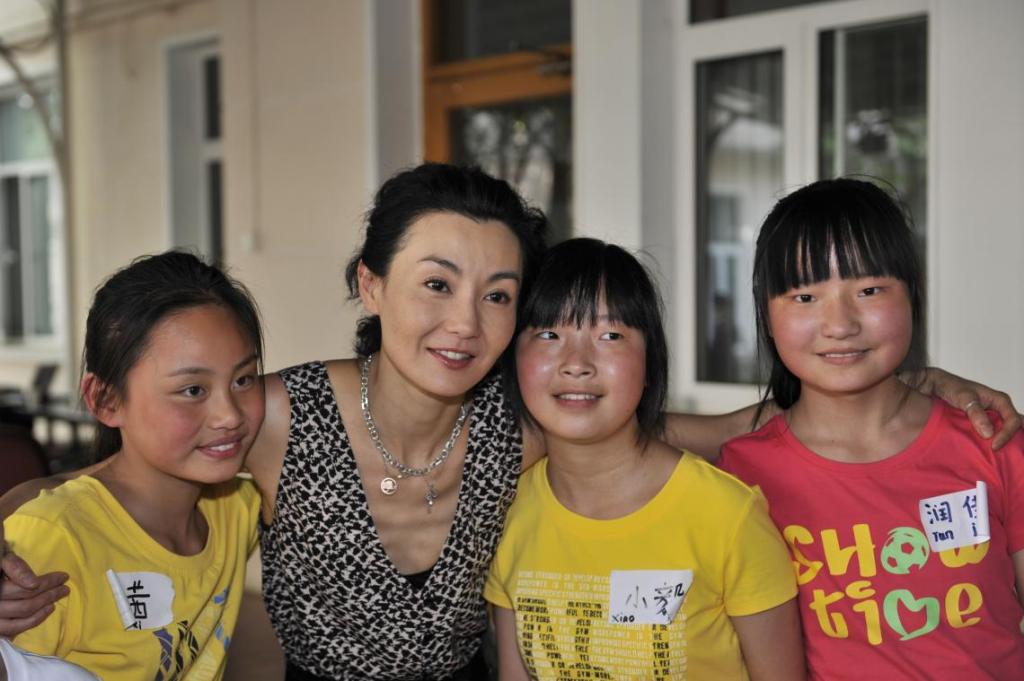
In the mood for love: Maggie Cheung and children

Maggie Cheung and the young presenters, including Xi-xi (far left).
© UNICEF/China/2010/Martin Ye 

Note: This blog post was written in 2011. In 2021, China announced the eradication of extreme poverty in the country, having lifted nearly 800 million people out of poverty.

Child poverty is not solely a problem for poor countries. Although China is now the world’s second largest economy, having overtaken Japan in February, its spectacular economic growth has not yet fully reached the poorest children and communities. There are still 100 million children living on less than $2 a day, with stark disparities between urban and rural areas.

Continue reading “In the mood for love: Maggie Cheung and children”