Time machines: riding Sri Lanka’s railway

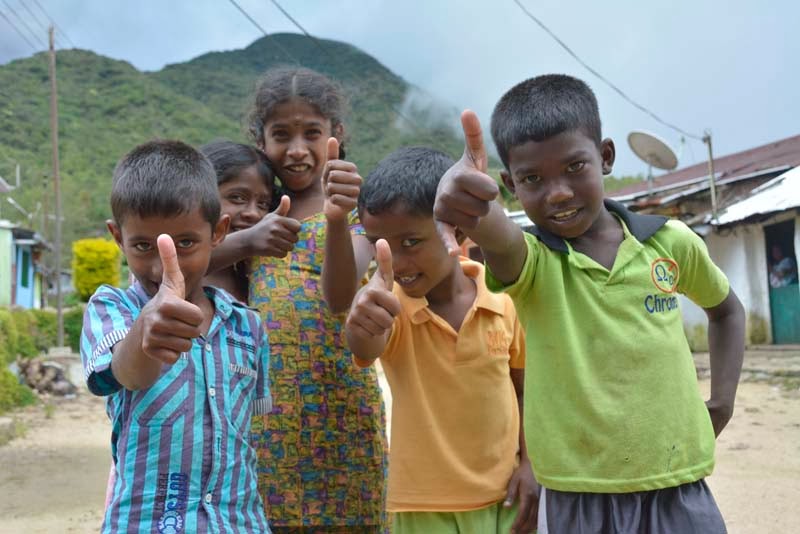
Children greet us at a village on a hike through the mountains of Sri Lanka
© Andy Brown/2013/Sri Lanka

In Sri Lanka, the railroad is not just a track for trains. People build their homes along it, open shops on the sidings, and walk between the rails. This is what I was doing in November – walking along the train tracks to Ella Rock. Together with my friends Rob and Laura, I was on a hike high in the mountains of Sri Lanka’s central plateau. Our guide, Chamal, assured us that the train tracks were the best route. “No need to worry,” he said, noting our concern. “If the train comes we’ll hear it in plenty of time to get out of the way.”

Continue reading “Time machines: riding Sri Lanka’s railway”
Welcome Obama: making history in Myanmar

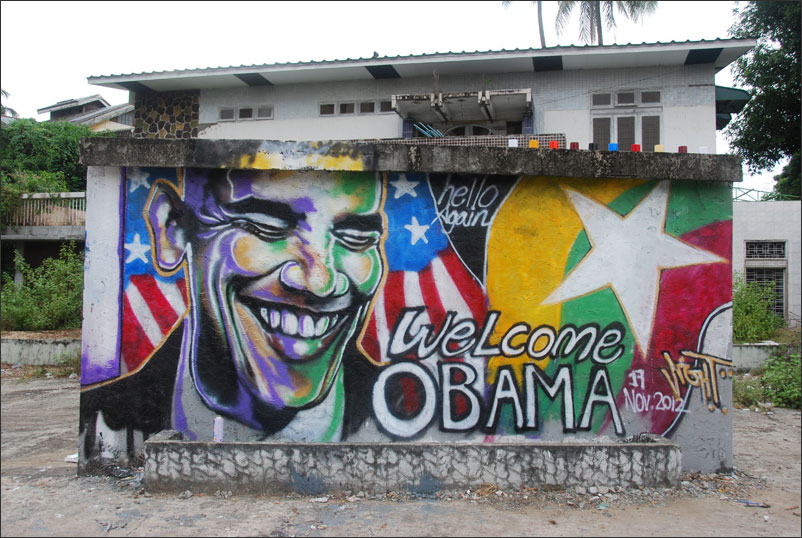
‘Welcome Obama’ graffiti on the roadside opposite my Yangon hotel
© Andy Brown/Myanmar 2012

I always seem to be visiting Myanmar (previously Burma) at historic moments. On my first visit in June, Aung San Suu Kyi was visiting London for the first time in 24 years. On my second in November, Barack Obama was making the first visit to the country by a serving US President. On the street opposite my hotel, a large ‘Welcome Obama’ graffiti mural had sprung up, and the papers were full of the news. ‘From Sanctions to Success’ claimed the headline of the Myanmar Times, with articles inside ranging from sober analysis of the visit to a fortune teller’s predictions for Obama’s second term. Whatever else, Myanmar remains a deeply superstitious country.

Continue reading “Welcome Obama: making history in Myanmar”

Opening up: visiting Burma at a time of change

A stall selling Aung San Suu Kyi t-shirts at Bogyoke market
© Andy Brown/Myanmar 2012

While Aung San Suu Kyi was visiting London for the first time in 24 years, I was in Yangon, Myanmar (previously known as Rangoon, Burma). It was a fascinating time to visit, with the country just starting to open up politically and economically. On the drive from the airport to the hotel, I passed several street vendors openly selling t-shirts of ‘The Lady’, an activity which two years previously would have landed them in jail.

Although it’s less than 600km from Bangkok, Rangoon felt like a different world, or at least a different time. Most people – both men and women – still wear the traditional longhi, a sarong-like wrap-around skirt made from a tube of fabric that you step into. In Thailand, this is now only seen on formal occasions. Women and children also covered their cheeks, nose and forehead in coloured chalk. Initially I assumed this had cultural or religious significance, but I was wrong. “It’s actually cosmetic,” my colleague Ye Lwin explained.

Continue reading “Opening up: visiting Burma at a time of change”