Mongolia: frozen lakes and stone cooked lamb

Snowcapped mountains emerge from the mist at Khuvsgul Lake
© Andy Brown/2013/Mongolia

Look at a map of Khuvsgul and one feature will jump out at you – Khuvsgul Nuur, or lake. This is a massive 2,760 square kilometre body of water that stretches almost to the border with Siberia. It is the second largest in Asia and one of the oldest lakes in the world, being among just 17 that formed over two million years ago. Mongolians call it ‘ocean mother’ and revere it as the country’s main source of fresh water. It is famous for its clear, drinkable water and blue/green colour.

Continue reading “Mongolia: frozen lakes and stone cooked lamb”
Mongolia: land of the eternal blue sky

Herds of livestock wander through the barren landscape of Khuvsgul
© Andy Brown/2013/Mongolia

Mongolia is unlike any other country I’ve been to. For most of the year it’s a frozen wasteland. Temperatures plunge to minus 35, lakes freeze over and heavy snow piles up across the land. Then, for a few brief months in summer, the snow melts and the country is transformed into a land of wide, open grasslands, sparkling lakes and vast green forests under an endless blue sky. I visited in June, when this transformation was nearly complete. The snow had temporarily retreated to the mountain tops, leaving the land clear for people, animals and vehicles.

Continue reading “Mongolia: land of the eternal blue sky”

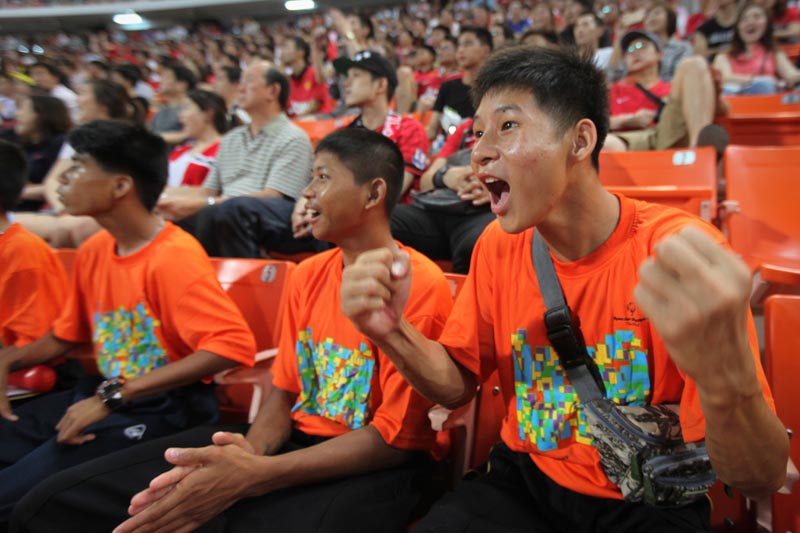
Home and Away: children with disabilities go to a Man Utd match

Pichit and other children respond to a near miss by Man Utd
© UNICEF Thailand/2013/Jingjai N.

This article was first published in the Bangkok Post on 23 July 2013.

Among the 60,000 football fans packing out Rajamangala National Stadium for a Manchester United football match last weekend were 36 children with intellectual disabilities. The atmosphere was buzzing. Many fans arrived in the club’s trademark shirts, waving balloons, scarves and banners.  The children, who were invited to the game by the Manchester United Foundation and UNICEF, had only seen the football stars on TV, and were among the most enthusiastic in the audience.

Continue reading “Home and Away: children with disabilities go to a Man Utd match”

Fighting the stereotypes: disabilities report launch

Children with disabilities pose for a photo after their drum game
© UNICEF EAPRO/2013/Andy Brown

UNICEF launched its annual flagship report, State of the World’s Children, in Da Nang, Vietnam. The subject was disability. I was on the ground with UNICEF Executive Director Anthony Lake as he visited centres around Da Nang and met children with disabilities.

I arrived in Vietnam two days before the report launch. From the air, Da Nang is stunning. We came in to land at sunset, with a cloudless view across a wide river delta and out to sea. Trees and village houses cast long shadows across the waterways and mud-brown fields. Near the coast, a handful of limestone peaks (the Marble Mountains) rose out of an otherwise flat landscape. Here and there, a few cargo boats made their way downstream to the sea.

Continue reading “Fighting the stereotypes: disabilities report launch”

Children with disabilities overcome the legacy of Agent Orange

Three-year-old Dan was born with disabilities because of Agent Orange
© UNICEF Viet Nam/2013/Truong Viet Hung

Dang Hong Dan is just three years old but he’s a victim of the Vietnam War. He was born with disabilities because of Agent Orange – a chemical sprayed in the south of the country during the war to destroy crops and forests. Although the war ended almost four decades ago, Agent Orange still contaminates fields and rivers in the Mekong Delta region. It gets into food and drinking water, causing birth defects in children.

Continue reading “Children with disabilities overcome the legacy of Agent Orange”

Cambodia: after the floods, a brighter future

Leng Silong, 12, writes equations on the board at a flood affected school
© UNICEF Cambodia/2012/Andy Brown

Cambodia is one of the poorest countries in South East Asia but also has perhaps the richest culture and history. In ancient times it was the seat of the Khmer Empire that stretched across the region and influenced the culture and religion of present day Thailand, Laos and Vietnam. More recently, it suffered the massacres and misrule of the Khmer Rouge, from which it has yet to fully recover.

I visited Cambodia to work with the UNICEF country office on digital communications and train staff in local ‘zone offices’ to write stories about children. I had a punishing schedule, with three provinces to cover in four days and groups of up to 20 people to manage. However, it was a great chance to see the country and meet local communities.

Continue reading “Cambodia: after the floods, a brighter future”

The dark of day: life in a Jakarta urban slum

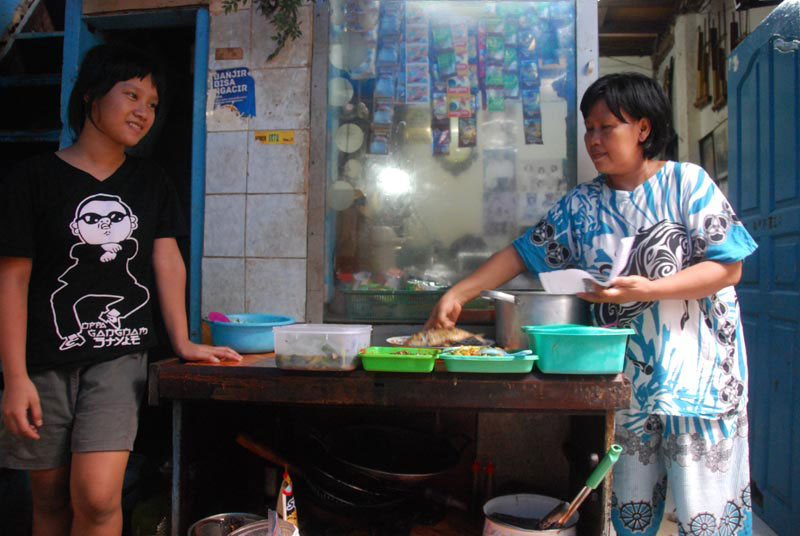
In the mornings, Neng helps her mum on the family food stall
© UNICEF/Indonesia 2012/Andy Brown

Neng is fourteen years old. She lives and works on Venus Alley, a lane in the notorious Jembatan Besi slum in Jakarta, Indonesia. Unlike other children her age, she rarely gets to see the sun. The slum is one of the most densely populated in Indonesia, rising to four stories in places. The ground floor homes are reasonably well constructed but as they ascend, they become increasingly makeshift, with walls and floors made from wood and scrap metal.

Continue reading “The dark of day: life in a Jakarta urban slum”

A stitch in time: street children learn a trade

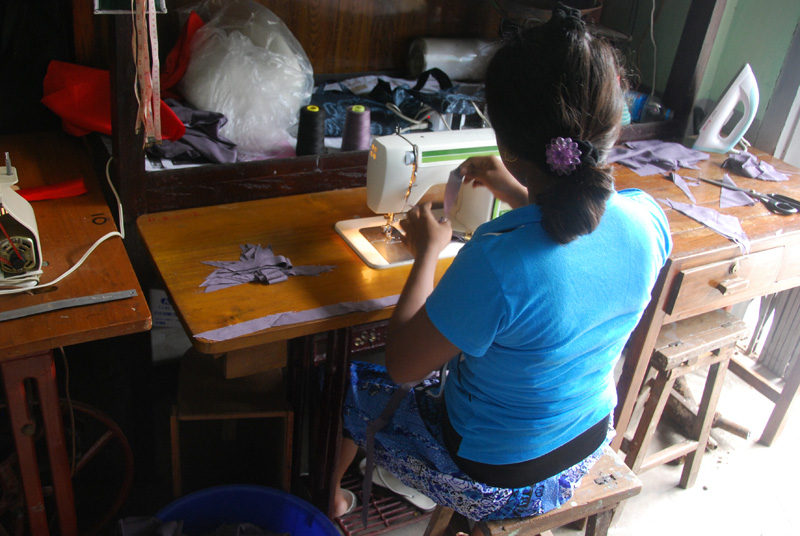
Thanda sews a shirt during the vocational training offered to street children
© UNICEF Myanmar/2012/Andy Brown

Sixteen-year-old Thanda* has spent much of her life living and working on the streets of Yangon, capital of Myanmar (also known as Rangoon, Burma). She is a a Burmese of ethnic Indian descent: a small, serious teenager in a blue polo shirt and traditional longyi skirt.

Thanda’s father is a manual labourer and her mother is a washer woman. She has seven siblings. When the family earns enough, they live in bamboo hut outside town. But other times they can’t afford the rent and have to live on the streets. “I used to pick up garbage with my brothers,” she told me when I met her at a drop-in centre for street children. “We would sell plastic bottles to junk shops for 2 to 4 dollars a day. I never went to school and I didn’t know how to look after my health.”

Continue reading “A stitch in time: street children learn a trade”

Coping with tragedy: the legacy of war in Laos

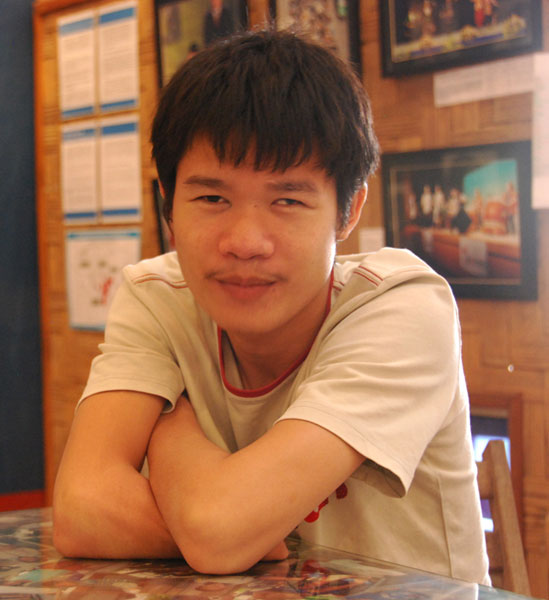
Peter Kim, a young bomb survivor, at the COPE centre
© UNICEF/Laos 2012/Andy Brown

Peter Kim is a victim of the Vietnam War. But he’s not a Vietnamese or American veteran; he’s a 20-year-old Lao youth living in Vientiane. Four years ago he lost both his hands and eyesight to one of the millions of unexploded bombs that still litter the Laos countryside almost four decades after the war ended.

Peter Kim grew up in a small rural village in Viangchan province, where his father grew rice and kept cows and buffalos. “On my sixteenth birthday, I went to school for an exam,” he told me. “I came home with my friend. On the way back, my friend saw something on the ground. He picked it up to show me. I tried to open it and that’s when it exploded. It happened very fast. Afterwards I couldn’t see or hear anything.”

Continue reading “Coping with tragedy: the legacy of war in Laos”

Special delivery: Timorese women give birth safely

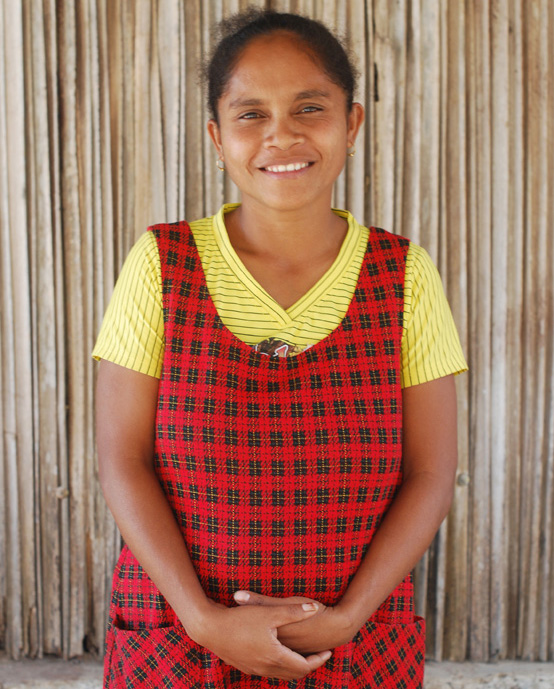
Isabelle wants to deliver her fifth child at a health centre
© UNICEF Timor-Leste/2012/Andy Brown

Isabelle de Santos, 29, lives in Suku (village) Hatólia in Ermera district, Timor-Leste. Her husband is a coffee farmer. She already has four children aged six to 12-years old, and is four months pregnant with her fifth. “I’m hoping it will be a boy so he can help his father in the fields,” she says, laughing.

Suku Hatólia is part of a new initiative that encourages women to give birth at their nearest health centre. After a meeting with her local community, Isabelle signed up. “I don’t want to suffer or die giving birth,” she says. “Now, when I go into labour we can call the health centre and they will send the ambulance to collect me. I’m very happy to know they will come.”

Continue reading “Special delivery: Timorese women give birth safely”