Beijing’s historic hutongs (part two)

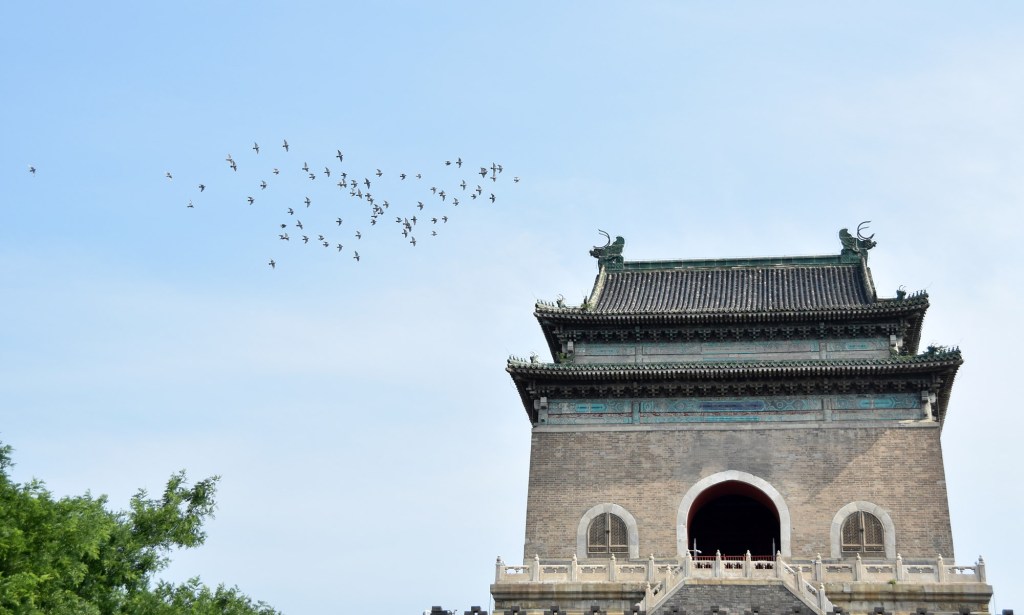
A flock of birds fly over the Bell Tower in the heart of old Beijing.
© Andrew Brown/2025/China

This year, I’ve continued to explore Beijing’s historic hutongs. My first photo walk of the year was in May, with some friends from work. We started early at the Bell and Drum Towers, which were used in imperial times to announce the time of day. From the towers, we explored the narrow side streets, looking for interesting details of local life. Although this can be a busy tourist area later in the day, at 8am on a Sunday morning the square between the two towers is mainly used by local people for exercise. We saw groups of older people practicing tai chi, some of them in traditional costumes and armed with fencing swords or spears. Others performed a colourful ribbon dance, swirling long strips of fabric around in time to Chinese pop music from a portable stereo.

Continue reading “Beijing’s historic hutongs (part two)”

Photos: Beijing’s historic hutongs

A classic hutong scene: these red doors and lion-head doorknockers are widespread. People often leave the doors open, allowing you to glimpse the communal courtyard houses inside.
© Andrew Brown/2024/China

My favourite place to photograph in Beijing is the historic hutongs (alleyways) in the old town. Originally built by the Mongolian Yuan Dynasty in the Thirteenth Century, these narrow passages are filled with stone and tiled courtyard houses that once housed servants of the imperial palace and their families. Plain grey brick walls are interspersed with bright red doors with grinning lion head knockers and banners with good luck sayings on them in elegantly-painted Chinese characters. Behind these are courtyard houses, where several families or generations live communally. In the summer, older men hang around the doorways with their t-shirts rolled up over their stomachs in the so-called “Beijing bikini”, while brightly coloured birds chirp from overhead cages, hung below the eaves of houses.

Continue reading “Photos: Beijing’s historic hutongs”