Safe from harm: tackling online child sexual abuse

A rescued child in the playroom at the Child Protection Unit, Philippines
© UNICEF/Philippines 2016/Andy Brown

The Philippines has become the global epicentre of the live stream sexual abuse trade, and many of the victims are children. In the slums of Manila, a police raid of a child sexual exploitation operation illuminates the challenges the country faces in protecting vulnerable children and prosecuting their abusers.

One evening in 2014, Philippines police raided an ordinary looking home in the slums of Manila. It was just before midnight, and darkness permeated the surrounding narrow alleys as the officers entered with a search warrant. Inside the small single room house, they found an unusual amount of computer equipment: laptops, webcams and a Wi-Fi router.

Continue reading “Safe from harm: tackling online child sexual abuse”
Families shelter from Typhoon Hagupit

© UNICEF Philippines/2014/Andy Brown

Typhoon Hagupit passed south of Manila, capital of the Philippines, overnight on Monday. Wind and rain brought flood risks for slum communities living near the river. In Barangay Bagong Silangan, Quezon City (part of Metro Manila), an evacuation centre was set up in a covered court on the hillside above a flood plain.

Continue reading “Families shelter from Typhoon Hagupit”

Typhoon Hagupit diary: into the eye of the storm

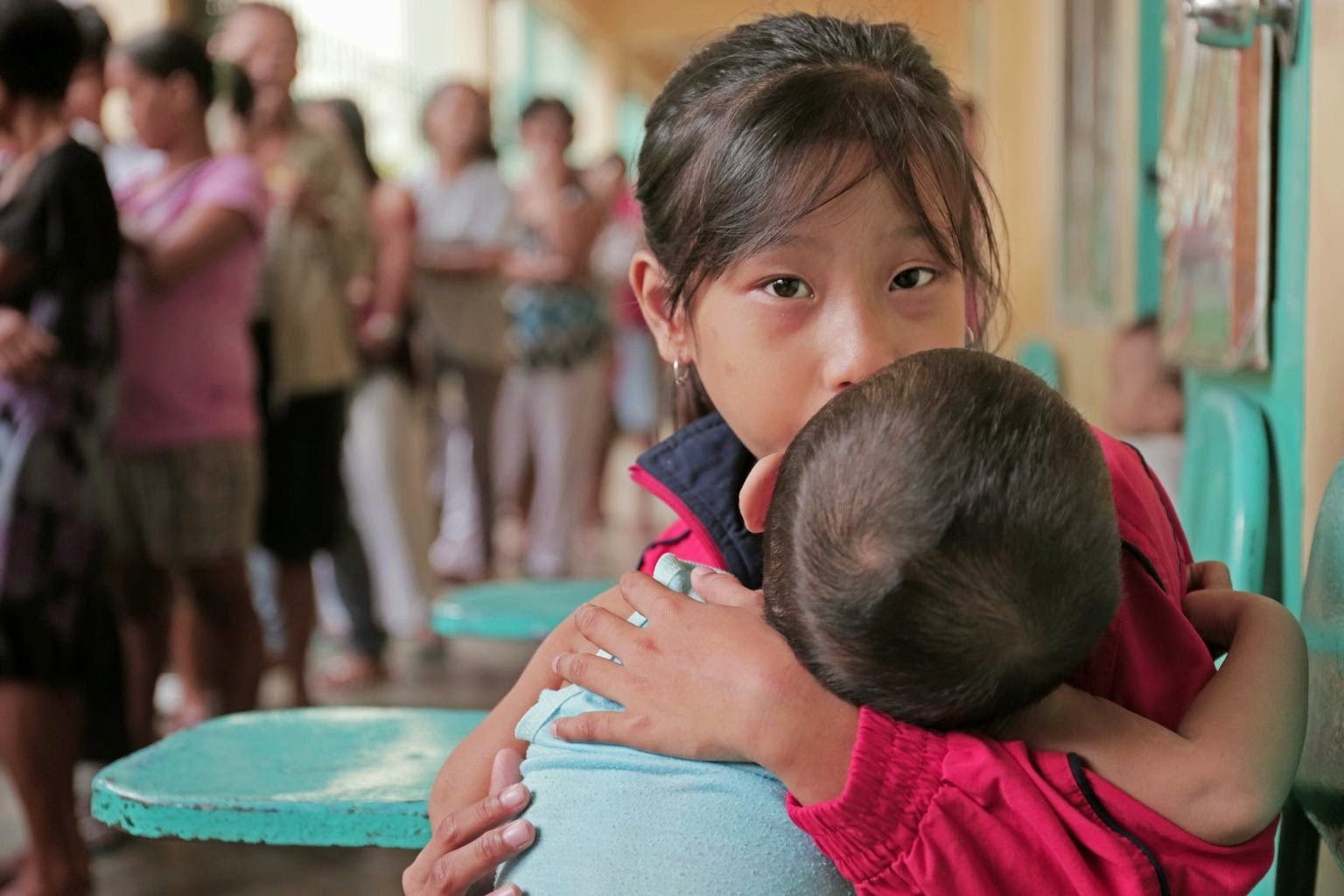
Carmela, 8, holds her brother Joshua as they wait for Typhoon Hagupit to pass
© UNICEF/UNI175840/Samson

Sunday 7 December – Yesterday I arrived in Manila, the Philippines, a day or two ahead of Typhoon Hagupit (known locally as Ruby). Looking out to sea from UNICEF’s office on the 30th floor of RCBC Plaza, there’s no sign yet of the typhoon. There’s even a narrow band of sunlight on the horizon. But everyone knows that it’s coming.

Continue reading “Typhoon Hagupit diary: into the eye of the storm”

Between two worlds: diving in Malapascua

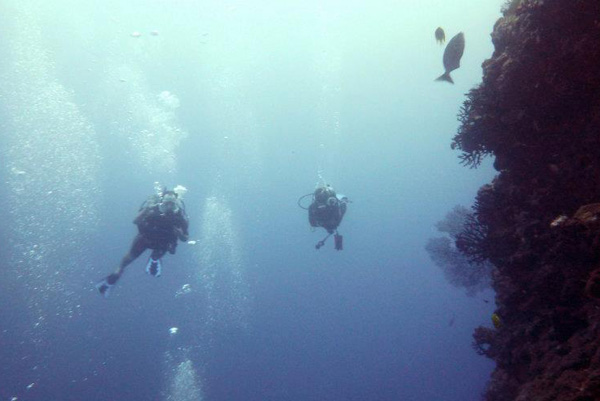
Me (left) diving in Papua New Guinea in March
© Thierry Dardare/2012

There’s something astonishing about stepping out of one world and into another. I’m reading a book about the moon landings and in many ways it reminds me of diving, the key difference being the speed of the transition. With diving, you kit up and step off the back of a boat, and within minutes you’re weightless and submerged. The world of ocean surface, boats and islands is replaced by an alien, underwater realm of iridescent coral, shoals of brightly coloured fish and – if you’re lucky – a huge thresher shark gliding through the blue haze.

Continue reading “Between two worlds: diving in Malapascua”

Ugly duckling: eating balut in the Philippines

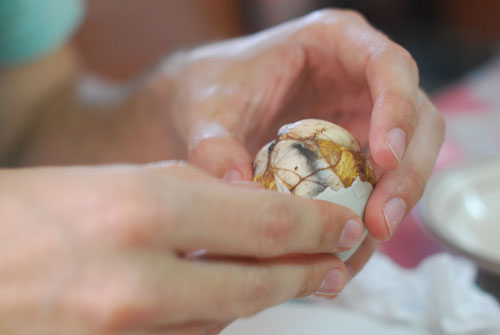
Peeling a fertilised balut egg, while trying to hold down my nausea
© Marge Francia/2012/Philippines

Balut is probably South East Asia’s most gruesome delicacy. It’s a fertilized duck egg with a half-grown embryo that is boiled alive and eaten whole. For Filipinos, balut is a treat. They buy it from street vendors or in local restaurants and bars, where it is served as a drinking snack, much like salted peanuts in British pubs. Inside the shell is a curled up foetus that looks like something out of an Alien horror movie or one of Gunther von Hagens’ Body Worlds exhibitions. Filipino children will cheerfully crunch their way through the foetal bones and feathers but just the thought of it makes me feel ill.

Continue reading “Ugly duckling: eating balut in the Philippines”

Pirates of the Pacific: colonial history in Cebu

A painting at the Basilica del Santo Nino, showing an idealised view of colonial history
© Andy Brown/Philippines 2012

From a European perspective, the history of the Philippines began abruptly in 1521 with the arrival of the Portuguese conquistador Ferdinand Magellan. Like Christopher Columbus before him, Magellan was a mercenary on hire to the King of Spain. His mission was to find a new trade route to the Spice Islands by heading west from Europe via the Spanish colony of Mexico, handily avoiding the Portuguese navy, which controlled the Eastern route around Africa.

Continue reading “Pirates of the Pacific: colonial history in Cebu”

Road to recovery: children go back to school

Ten year old Joy hugs her grandfather at the evacuation centre.
© UNICEF Philippines/2012/Andy Brown

Ten-year-old Crizelle Joy lives with her grandfather, sister, two aunts and uncles, and nephew in a small one-room hut at an evacuation centre in Barangay (village) Mandulog in Iligan, the Philippines. The village is right next to the river and was one of the worst affected by the flash floods that followed Tropical Storm Washi in December.

“We were asleep in our house when the flood came,” Joy remembers. “The Barangay Captain woke us up. He was going from house to house in a bamboo boat. We had to leave immediately. My grandfather brought blankets for me and my sister but we left everything else behind. I was very scared. It was dark and the water was rising, and I could hear people crying out for help.

Continue reading “Road to recovery: children go back to school”

Relocation, relocation: families living in tent cities

Children use an umbrella to shelter from the sun at the tent city.
© UNICEF Philippines/2012/Andy Brown

I was in the Philippines recently to see how UNICEF was helping children in the aftermath of Tropical Storm Sendong, which hit the southern island of Mindanao last December. This was the worst storm in the area in modern history, dropping the equivalent of a month’s rainfall in just one day and causing flash floods which left thousands of families homeless.

After my morning visit to Barangay Carmen evacuation centre (see part one of this blog), we returned to ‘Alpha Base’, the temporary UNICEF office in Cagayan de Oro (CdO). In fact it was a rented house in a residential compound, with a UNICEF banner hung from an upstairs balcony. Here I met Phil, a bubbly communications specialist from New Zealand who was my main contact for the trip, as well as Love, a friend of mine from the Manila office who had volunteered to work in CdO, and Rohannie, a child protection officer who I was due to accompany on her afternoon rounds.

Continue reading “Relocation, relocation: families living in tent cities”

Movement of the masses: the Filipino jeepney

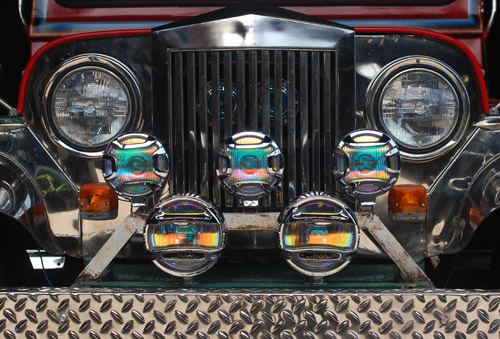
A newly-built jeepney at Sarao Motors, complete with five extra headlights.
Photo © Andy Brown/2011/Philippines

I’ve been fascinated by jeepneys since the first time I first visited Manila in 2009. The psychedelic, graffiti-style artwork mixing religion and pop culture. The names and slogans emblazoned on the front, like ‘Evangeline’ or ‘God is Love’, dwarfing the actual destination. The myriad of coloured streamers and extra, false headlights that serve no practical purpose whatsoever. Decked out in all this finery, they speed up and down the main roads of Manila, picking people up and dropping them off apparently at random. They pile up at traffic lights, sounding their horns in a continuous cacophony and pumping black exhaust fumes into the already polluted atmosphere.

Continue reading “Movement of the masses: the Filipino jeepney”

Filipino history and the 'Pied Piper of Manila'

Carlos holds a portrait of Filipino ‘national hero’, Jose Rizal
Photo © Andy Brown/2011/Philippines

When I think of the great histories of the world – the Roman civil war of the First Century BC, the ‘Three Kingdoms’ of Imperial China, the British Raj and the partition of India – the Philippines doesn’t get much of a look in. But this oft-neglected corner of the world has a fascinating heritage that occasionally places it at the heart of global events in surprising ways.

I was first introduced to Filipino history in 2009 by Carlos Celdran, the self-styled ‘Pied Piper of Manila’, his diminutive figure and larger-than-life character dressed up in Nineteenth Century top hat and tails. Every week, Carlos takes tourists and locals around Manila’s handful of historic buildings – those that survived World War II – and treats them to, not so much a tour, as a piece of stand-up political theatre.

Continue reading “Filipino history and the 'Pied Piper of Manila'”