Mongolia: caravan of camels, hotel of horrors

A caravan of camels crossing the road outside Murun
© Andy Brown/2013/Mongolia

The third and final stage of my Mongolia journey was perhaps the most challenging, with both highs (encountering a caravan of camels) and lows (staying in a horror movie hotel). We were planning to drive south from Tsagaan-Uur to Tarialan soum, but were warned that the ‘road’ had become impassable because of the rains. So we had to take a longer way round.

We passed some amazing sights along the way. We drove through woodland where the ground was sprinkled with brightly coloured spring flowers. When we came out into a meadow, it was so dense with flowers that the grass looked canary yellow instead of green. Later, we saw a large eagle that had just killed a rabbit. It moved along the track away from us, dragging its prey with one taloned foot. It spread its wing to fly but the rabbit was too heavy for it to take off. Given the choice, the bird stayed on the ground and slowly hopped out of view.

Continue reading “Mongolia: caravan of camels, hotel of horrors”

Mongolia: frozen lakes and stone cooked lamb

Snowcapped mountains emerge from the mist at Khuvsgul Lake
© Andy Brown/2013/Mongolia

Look at a map of Khuvsgul and one feature will jump out at you – Khuvsgul Nuur, or lake. This is a massive 2,760 square kilometre body of water that stretches almost to the border with Siberia. It is the second largest in Asia and one of the oldest lakes in the world, being among just 17 that formed over two million years ago. Mongolians call it ‘ocean mother’ and revere it as the country’s main source of fresh water. It is famous for its clear, drinkable water and blue/green colour.

Continue reading “Mongolia: frozen lakes and stone cooked lamb”

Mongolia: land of the eternal blue sky

Herds of livestock wander through the barren landscape of Khuvsgul
© Andy Brown/2013/Mongolia

Mongolia is unlike any other country I’ve been to. For most of the year it’s a frozen wasteland. Temperatures plunge to minus 35, lakes freeze over and heavy snow piles up across the land. Then, for a few brief months in summer, the snow melts and the country is transformed into a land of wide, open grasslands, sparkling lakes and vast green forests under an endless blue sky. I visited in June, when this transformation was nearly complete. The snow had temporarily retreated to the mountain tops, leaving the land clear for people, animals and vehicles.

Continue reading “Mongolia: land of the eternal blue sky”

Independence days: the new nation of Timor-Leste

In the mornings, Neng helps her mum on the family food stall
© UNICEF/Indonesia 2012/Andy Brown

I’d only vaguely heard of Timor-Leste (or East Timor) before I went there last August. The tiny former Portuguese colony of just over a million people is most famous as the first new nation of the century. It achieved independence in 2002 after a long and bloody struggle with Indonesia, which invaded after the Portuguese left. The BBC describes the subsequent rebuilding of Timor-Leste as “one of the UN’s biggest success stories” so it was fascinating to visit with UNICEF, the UN Children’s Fund.

Continue reading “Independence days: the new nation of Timor-Leste”

Welcome Obama: making history in Myanmar

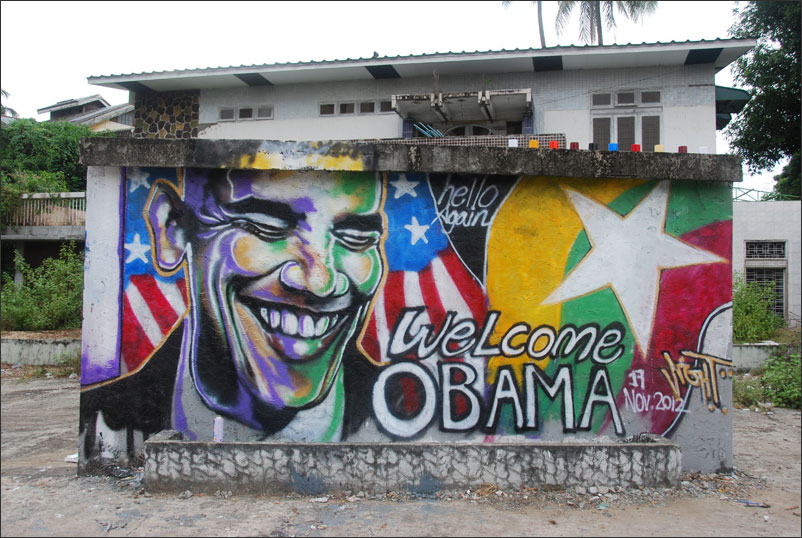
‘Welcome Obama’ graffiti on the roadside opposite my Yangon hotel
© Andy Brown/Myanmar 2012

I always seem to be visiting Myanmar (previously Burma) at historic moments. On my first visit in June, Aung San Suu Kyi was visiting London for the first time in 24 years. On my second in November, Barack Obama was making the first visit to the country by a serving US President. On the street opposite my hotel, a large ‘Welcome Obama’ graffiti mural had sprung up, and the papers were full of the news. ‘From Sanctions to Success’ claimed the headline of the Myanmar Times, with articles inside ranging from sober analysis of the visit to a fortune teller’s predictions for Obama’s second term. Whatever else, Myanmar remains a deeply superstitious country.

Continue reading “Welcome Obama: making history in Myanmar”

Between two worlds: diving in Malapascua

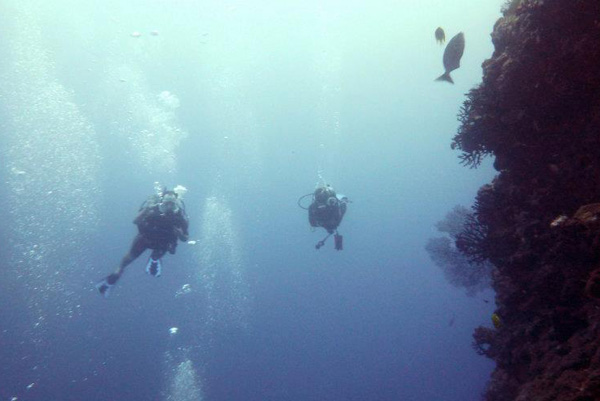
Me (left) diving in Papua New Guinea in March
© Thierry Dardare/2012

There’s something astonishing about stepping out of one world and into another. I’m reading a book about the moon landings and in many ways it reminds me of diving, the key difference being the speed of the transition. With diving, you kit up and step off the back of a boat, and within minutes you’re weightless and submerged. The world of ocean surface, boats and islands is replaced by an alien, underwater realm of iridescent coral, shoals of brightly coloured fish and – if you’re lucky – a huge thresher shark gliding through the blue haze.

Continue reading “Between two worlds: diving in Malapascua”

Opening up: visiting Burma at a time of change

A stall selling Aung San Suu Kyi t-shirts at Bogyoke market
© Andy Brown/Myanmar 2012

While Aung San Suu Kyi was visiting London for the first time in 24 years, I was in Yangon, Myanmar (previously known as Rangoon, Burma). It was a fascinating time to visit, with the country just starting to open up politically and economically. On the drive from the airport to the hotel, I passed several street vendors openly selling t-shirts of ‘The Lady’, an activity which two years previously would have landed them in jail.

Although it’s less than 600km from Bangkok, Rangoon felt like a different world, or at least a different time. Most people – both men and women – still wear the traditional longhi, a sarong-like wrap-around skirt made from a tube of fabric that you step into. In Thailand, this is now only seen on formal occasions. Women and children also covered their cheeks, nose and forehead in coloured chalk. Initially I assumed this had cultural or religious significance, but I was wrong. “It’s actually cosmetic,” my colleague Ye Lwin explained.

Continue reading “Opening up: visiting Burma at a time of change”

Ugly duckling: eating balut in the Philippines

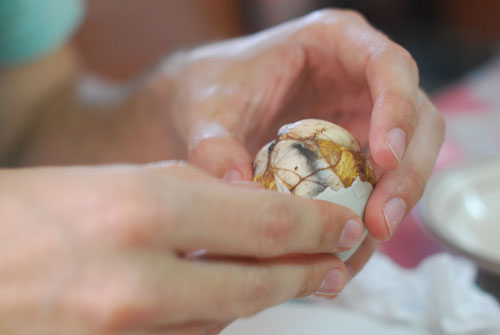
Peeling a fertilised balut egg, while trying to hold down my nausea
© Marge Francia/2012/Philippines

Balut is probably South East Asia’s most gruesome delicacy. It’s a fertilized duck egg with a half-grown embryo that is boiled alive and eaten whole. For Filipinos, balut is a treat. They buy it from street vendors or in local restaurants and bars, where it is served as a drinking snack, much like salted peanuts in British pubs. Inside the shell is a curled up foetus that looks like something out of an Alien horror movie or one of Gunther von Hagens’ Body Worlds exhibitions. Filipino children will cheerfully crunch their way through the foetal bones and feathers but just the thought of it makes me feel ill.

Continue reading “Ugly duckling: eating balut in the Philippines”

Pirates of the Pacific: colonial history in Cebu

A painting at the Basilica del Santo Nino, showing an idealised view of colonial history
© Andy Brown/Philippines 2012

From a European perspective, the history of the Philippines began abruptly in 1521 with the arrival of the Portuguese conquistador Ferdinand Magellan. Like Christopher Columbus before him, Magellan was a mercenary on hire to the King of Spain. His mission was to find a new trade route to the Spice Islands by heading west from Europe via the Spanish colony of Mexico, handily avoiding the Portuguese navy, which controlled the Eastern route around Africa.

Continue reading “Pirates of the Pacific: colonial history in Cebu”

Luang Prabang: monks procession at dawn

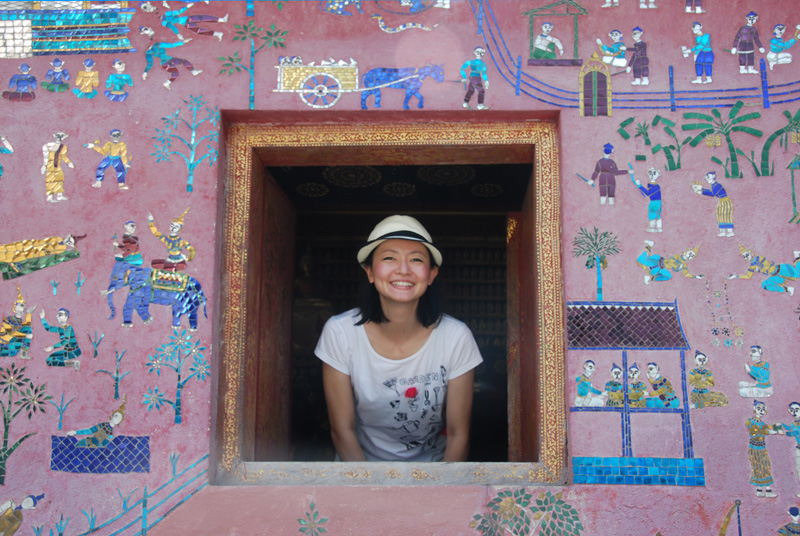
Joyce at Wat Xieng Thong. Having lost my camera memory card in January,
all these photos were taken on a return trip in October
© Andy Brown/Laos 2012

Luang Prabang is like a city adrift in space and time. The old royal capital of pre-communist Laos, it now feels like a cross between a suburb of Paris and a rural Thai village. It occupies a peninsular between the Mekong (see part two of this blog) and Nam Khan river, which takes a hairpin bend off the larger waterway. The main roads are lined with French restaurants, cafes and bakeries in colonial era buildings: brightly painted villas with wooden shutters on the windows. French tourists cycle lazily around between the cafes and sights, conversing in Gallic tones.

Continue reading “Luang Prabang: monks procession at dawn”