Myanmar: sunset fishermen, balloons over Bagan

Vendors wearing traditional longyis at a weekend market in Yangon
© Andy Brown/Myanmar 2014

In the two years since I first visited Burma, now increasingly called Myanmar, much has changed but much remains the same. Construction of the new Myanmar is proceeding apace in Yangon. Cranes and half-built skyscrapers litter the skyline, coffee shops are popping up along busy main roads, and young people are beginning to adopt western fashion.

But outside the capital, life goes on much as it has for the past several centuries. Here, roads deteriorate to earth tracks, towns and villages are largely blacked out after dark, monks collect alms in copper bowls at first light, both men and women wear traditional ‘longyi’ skirts, and the bicycle remains a common form of transport.

Continue reading “Myanmar: sunset fishermen, balloons over Bagan”
Welcome Obama: making history in Myanmar

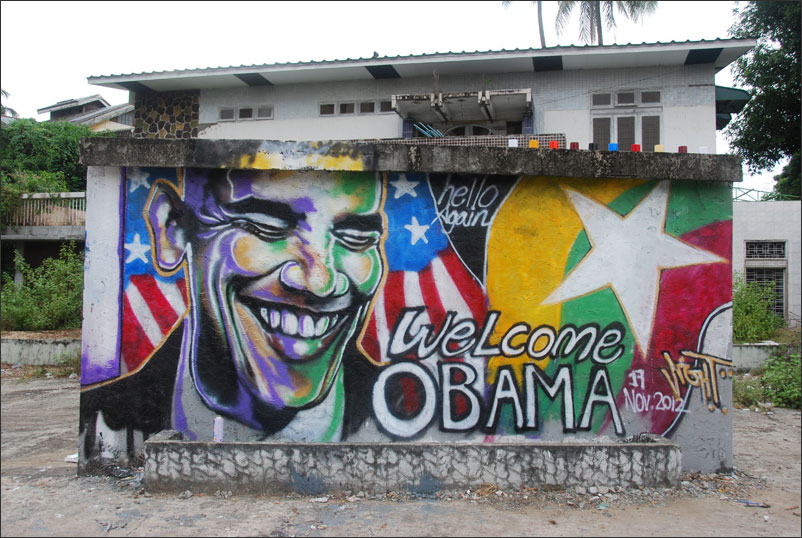
‘Welcome Obama’ graffiti on the roadside opposite my Yangon hotel
© Andy Brown/Myanmar 2012

I always seem to be visiting Myanmar (previously Burma) at historic moments. On my first visit in June, Aung San Suu Kyi was visiting London for the first time in 24 years. On my second in November, Barack Obama was making the first visit to the country by a serving US President. On the street opposite my hotel, a large ‘Welcome Obama’ graffiti mural had sprung up, and the papers were full of the news. ‘From Sanctions to Success’ claimed the headline of the Myanmar Times, with articles inside ranging from sober analysis of the visit to a fortune teller’s predictions for Obama’s second term. Whatever else, Myanmar remains a deeply superstitious country.

Continue reading “Welcome Obama: making history in Myanmar”

A stitch in time: street children learn a trade

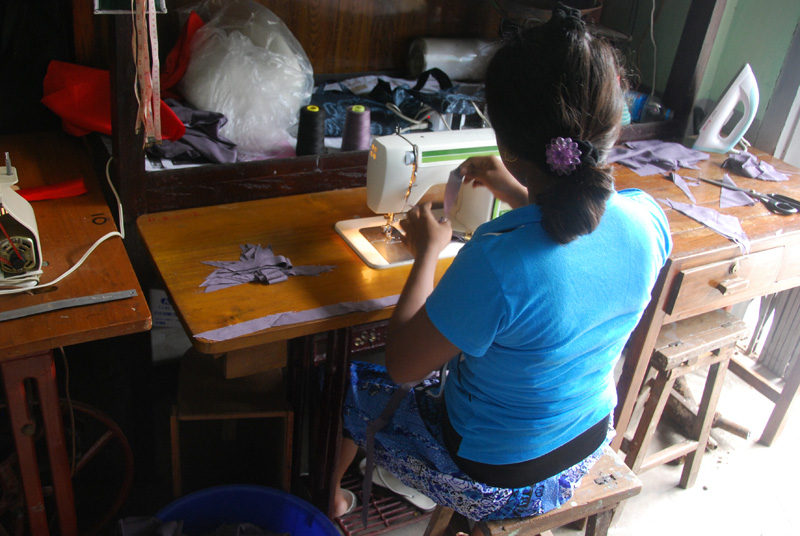
Thanda sews a shirt during the vocational training offered to street children
© UNICEF Myanmar/2012/Andy Brown

Sixteen-year-old Thanda* has spent much of her life living and working on the streets of Yangon, capital of Myanmar (also known as Rangoon, Burma). She is a a Burmese of ethnic Indian descent: a small, serious teenager in a blue polo shirt and traditional longyi skirt.

Thanda’s father is a manual labourer and her mother is a washer woman. She has seven siblings. When the family earns enough, they live in bamboo hut outside town. But other times they can’t afford the rent and have to live on the streets. “I used to pick up garbage with my brothers,” she told me when I met her at a drop-in centre for street children. “We would sell plastic bottles to junk shops for 2 to 4 dollars a day. I never went to school and I didn’t know how to look after my health.”

Continue reading “A stitch in time: street children learn a trade”

Opening up: visiting Burma at a time of change

A stall selling Aung San Suu Kyi t-shirts at Bogyoke market
© Andy Brown/Myanmar 2012

While Aung San Suu Kyi was visiting London for the first time in 24 years, I was in Yangon, Myanmar (previously known as Rangoon, Burma). It was a fascinating time to visit, with the country just starting to open up politically and economically. On the drive from the airport to the hotel, I passed several street vendors openly selling t-shirts of ‘The Lady’, an activity which two years previously would have landed them in jail.

Although it’s less than 600km from Bangkok, Rangoon felt like a different world, or at least a different time. Most people – both men and women – still wear the traditional longhi, a sarong-like wrap-around skirt made from a tube of fabric that you step into. In Thailand, this is now only seen on formal occasions. Women and children also covered their cheeks, nose and forehead in coloured chalk. Initially I assumed this had cultural or religious significance, but I was wrong. “It’s actually cosmetic,” my colleague Ye Lwin explained.

Continue reading “Opening up: visiting Burma at a time of change”