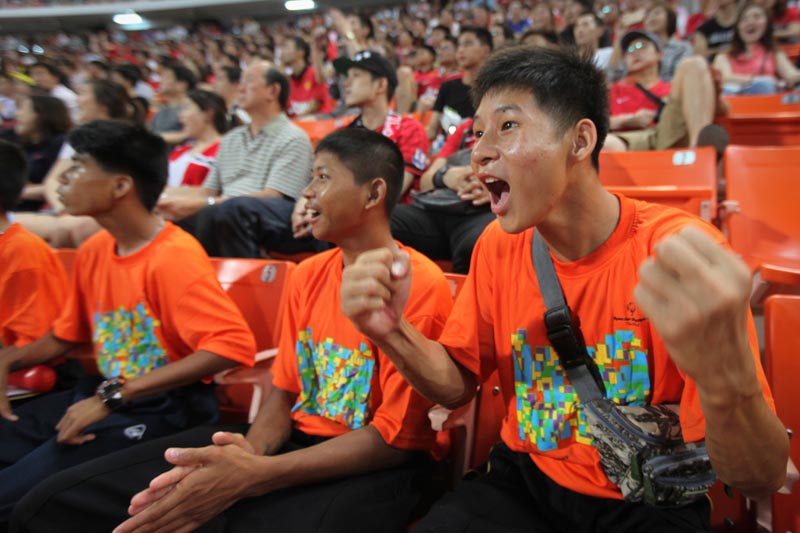
Home and Away: children with disabilities go to a Man Utd match

Pichit and other children respond to a near miss by Man Utd
© UNICEF Thailand/2013/Jingjai N.

This article was first published in the Bangkok Post on 23 July 2013.

Among the 60,000 football fans packing out Rajamangala National Stadium for a Manchester United football match last weekend were 36 children with intellectual disabilities. The atmosphere was buzzing. Many fans arrived in the club’s trademark shirts, waving balloons, scarves and banners.  The children, who were invited to the game by the Manchester United Foundation and UNICEF, had only seen the football stars on TV, and were among the most enthusiastic in the audience.

Continue reading “Home and Away: children with disabilities go to a Man Utd match”
A chance for change: young people learn a trade

This article was first published in the Bangkok Post on 19 January 2013.

At a university dormitory in Bangkok, 21 young people from disadvantaged communities line up to pull the name of a top hotel out of a bag. Behind them, teams of hotel staff in uniforms wait to meet their new apprentices. For 19-year-old Daojai, a cabbage farmer from a Mon hill tribe village in Petchaburi province, it’s an exciting moment. She reaches in and pulls out a piece of paper saying ‘JW Marriot’ and her new life begins.

Continue reading “A chance for change: young people learn a trade”

The dark of day: life in a Jakarta urban slum

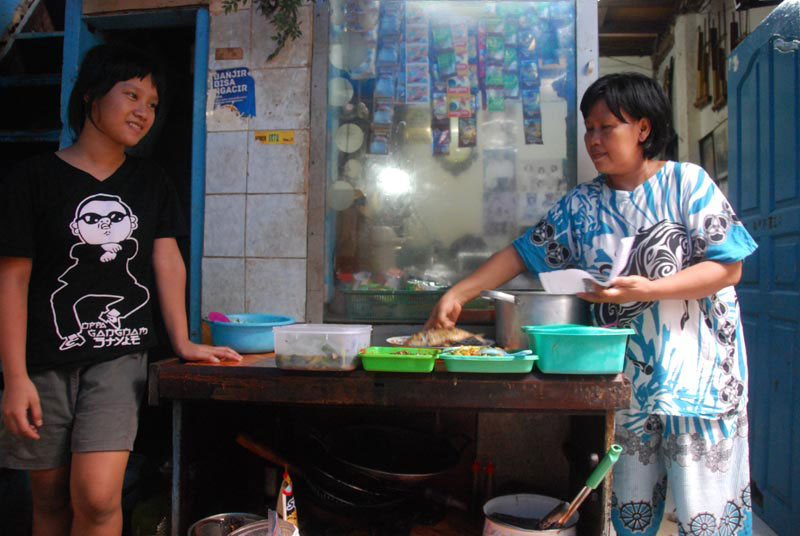
In the mornings, Neng helps her mum on the family food stall
© UNICEF/Indonesia 2012/Andy Brown

Neng is fourteen years old. She lives and works on Venus Alley, a lane in the notorious Jembatan Besi slum in Jakarta, Indonesia. Unlike other children her age, she rarely gets to see the sun. The slum is one of the most densely populated in Indonesia, rising to four stories in places. The ground floor homes are reasonably well constructed but as they ascend, they become increasingly makeshift, with walls and floors made from wood and scrap metal.

Continue reading “The dark of day: life in a Jakarta urban slum”

A stitch in time: street children learn a trade

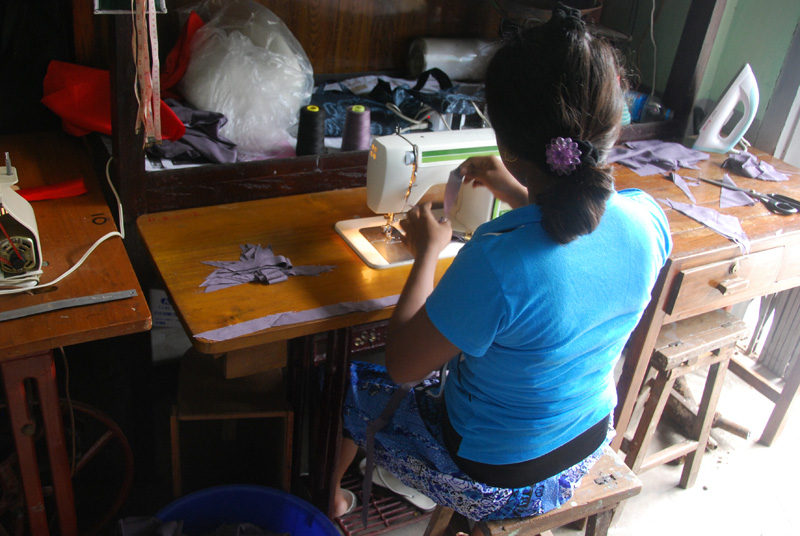
Thanda sews a shirt during the vocational training offered to street children
© UNICEF Myanmar/2012/Andy Brown

Sixteen-year-old Thanda* has spent much of her life living and working on the streets of Yangon, capital of Myanmar (also known as Rangoon, Burma). She is a a Burmese of ethnic Indian descent: a small, serious teenager in a blue polo shirt and traditional longyi skirt.

Thanda’s father is a manual labourer and her mother is a washer woman. She has seven siblings. When the family earns enough, they live in bamboo hut outside town. But other times they can’t afford the rent and have to live on the streets. “I used to pick up garbage with my brothers,” she told me when I met her at a drop-in centre for street children. “We would sell plastic bottles to junk shops for 2 to 4 dollars a day. I never went to school and I didn’t know how to look after my health.”

Continue reading “A stitch in time: street children learn a trade”

Recipe for success: Delhi children learn to cook

Former street children working in the kitchen at the Butterflies catering school.
© UNICEF India/2011/Andy Brown

The notion of India as a single country is a relatively modern one, forged in the ashes of British rule in 1947. “India is more of a continent than a country,” my colleague Shweta said. “Most people here identify themselves as Punjabis or Bengalis first, and Indians second.” A quick glance at Wikipedia backed up her assertion. India has 28 states, 21 official languages, nine religions and over 200 ethnic and tribal groups.

Continue reading “Recipe for success: Delhi children learn to cook”