Vandy is treated for malnutrition

Meena comforts her son Vansy, 6 months, at a community outreach in Laos
© UNICEF China/2024/Andrew Brown

How UNICEF and China are supporting malnourished children in Laos

Meena is a 20-year-old first time mother from Houay On village in Nan District, Laos. Small and just past her teenage years, she still looks like a child herself. With her six-month old baby Vandy on her back, she walks up the hill to the village hall, where a community outreach from nearby Thongkang Health Centre is taking place. It’s around 9am but already well over 30°C. This is the end of the dry season, and the weather is brutally hot. The hills on the horizon are also much fainter than they should be: slash and burn agriculture has created a constant haze of smog that feels out of place in this rural area.

Continue reading “Vandy is treated for malnutrition”

Photos: morning alms giving, Laos

A line of monks pass locals seated outside the entrance to Wat Nong Sikhounmuang temple. Each monk gets a handful of rice in their bowl.
© Andrew Brown/2024/Laos

On my last morning in Laos, my alarm went off at 5am. I’d spent the last week visiting UNICEF nutrition projects in rural Nan District during the hottest month of the year, and I was very tempted to hit snooze and go back to sleep. However, I also knew that if I did, I’d beat myself up about it later. So I dragged myself out of bed, grabbed my camera, and headed out to the front of my hotel, where I got a tuk-tuk through the gradually lightening streets to the main temple district of Luang Prabang. My objective was to see Tak Bat, or the morning alms giving ceremony, which I’d first witnessed a decade before, during my first time living and working in Asia.

Continue reading “Photos: morning alms giving, Laos”

China: another brick in the wall

Hiking the Great Wall of China at Gubeikou (water town) towards the end of spring, May 2024.
© Andrew Brown/2024/China

It was an unusally warm day in February, when I arrived at Chongbian, north of Beijing, to hike the “wrong Great Wall.” We started climbing up through terraced farmland, along the way greeting some locals on a motorbike pulling a farm cart. On reaching the Wall, we turned right and hiked along a mountain ridge to the east. The watchtowers had been renovated with new cement but there were no stairs, so we had to climb up precarious piles of rocks to reach the doorways and rooftop – in Imperial times, there would have been wooden ladders here. In between the watchtowers was “wild wall,” crumbling masonry that was wide enough for two people to walk along safely. The trees were bare from winter, but long yellow grass still grew along the top of the wall, glowing in the afternoon sunshine.

Continue reading “China: another brick in the wall”

Families arrive in Dadaab, fleeing drought and conflict

Markabo Ali (right) with her youngest daughter Hodan, 9 months, and sister Habibo, 14 years.
© UNICEF Kenya/2023/Lucas Odhiambo

This story first appeared in the Star newspaper

Markabo Ali, 37, is mother to eight children. She used to live in Baidoa, Somalia, but left because of the prolonged drought. Now, she lives with her five daughters and young sister at Dadaab refugee camp, just across the border in Kenya. She sits in a small makeshift hut made from branches and plastic sheets, in an area of Ifo camp for new arrivals who are waiting to be assigned accommodation.

Continue reading “Families arrive in Dadaab, fleeing drought and conflict”

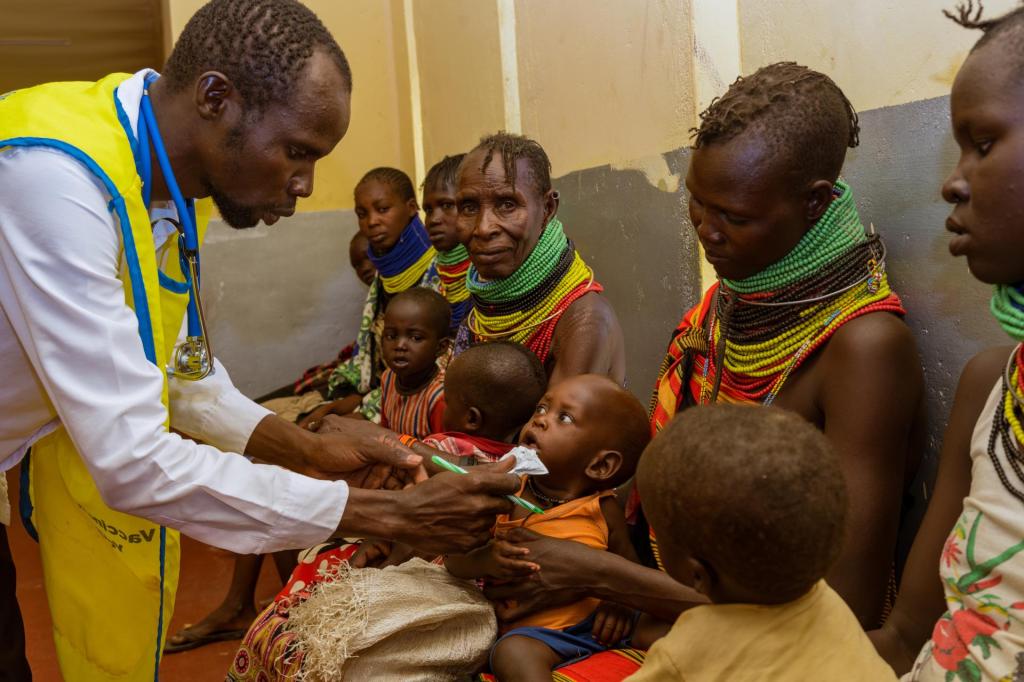
Daniel treats children for malnutrition

Daniel examines malnourished children at Sopel Dispensary, Turkana
© UNICEF Kenya/2023/Paul Kidero

This story first appeared in the Star newspaper.

Daniel Ereng is Nurse in Charge at Sopel Dispensary, Turkana County. He’s an energetic and passionate health care worker who has made it his personal mission in life to bring health and nutrition services to remote rural communities. Over the last three years, Kenya has been affected by the worst drought in decades, driven by climate change. Most of the families in Daniel’s area are pastoralists, who rely on their livestock for food, but very few of their animals have survived.

Continue reading “Daniel treats children for malnutrition”

Sharlyne recovers from drought

Sharlyne Kapua, 14, at the solar powered water system installed at her school
UNICEF Kenya/2023/Paul Kidero

Sharlyne is a bright and outgoing 14-year-old, who recently graduated from Nabulon Girls Primary School in Lodwar, where UNICEF last year installed a solar-powered water system. The county has been affected by drought for the last three years, and much of the livestock that families used to rely on has died. In the last week, scattered rains have finally arrived. The ground remains dry and sandy, but trees are starting to return to life, with tentative green growth on their branches. It’s a fragile moment for the county.

Continue reading “Sharlyne recovers from drought”

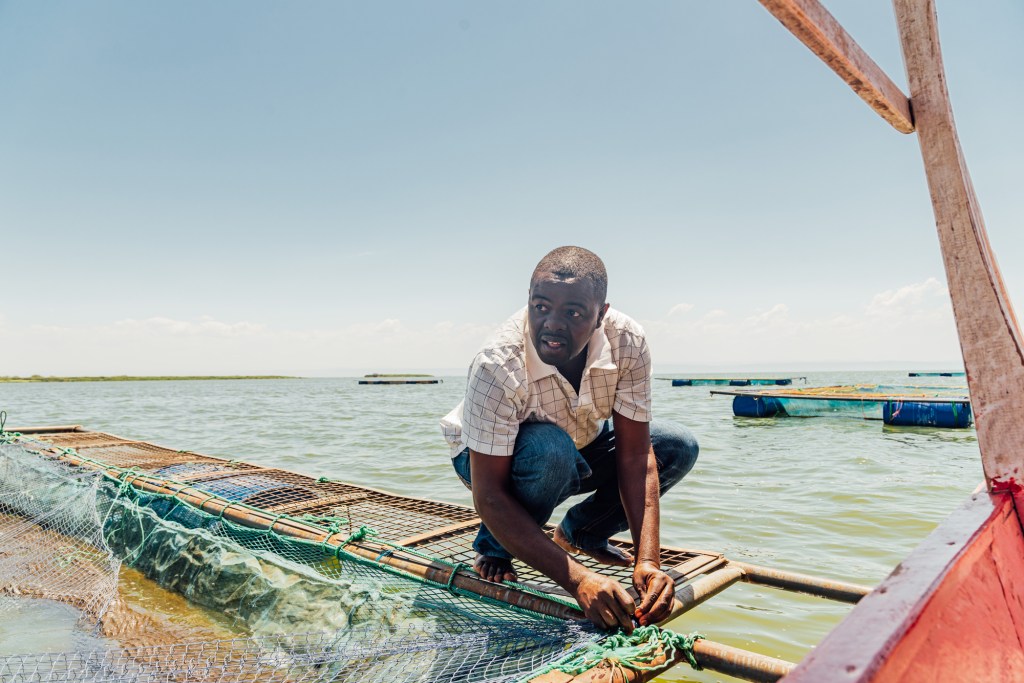
Young people get a head start in the fish industry

Fisherman Nicholas adjusts the net on one of his floating fish cages in Lake Victoria
© UNICEF Kenya/2023/Paul Kidero

This story first appeared in the Star newspaper.

The waters of Lake Victoria are calm off Dunga beach, Kisumu, as young entrepreneur Vincent and fisherman Nicholas climb into a wooden boat and head out to check on their fish. Storks perch on rocks emerging from the water along the lakeside, while further out white-sailed dhow boats cut across the breeze. “It’s calm now but, in a few hours, it will be very choppy,” Nicholas observes.

Continue reading “Young people get a head start in the fish industry”

Photos: dry season at Nairobi National Park

Ostrich walk across the dried out grassland of Nairobi National Park, with the city skyline behind them
© Andrew Brown/2023/Kenya

We visited Nairobi National Park in mid-March, towards the end of the dry season and during a prolonged drought. Over the previous three months, the unforgiving sun had wrung the last drops of moisture out of the vegetation. The grass, where it remained at all, had turned into dry yellow straw. This was clearly affecting the herbivores, which were weak from lack of food and easy prey for predators. Like in Amboseli, we saw lots of dead animals lying by the roadside – some eaten, others left almost untouched. The lions, however, looked well-fed and the vultures were numerous.

Continue reading “Photos: dry season at Nairobi National Park”

Young people invent an award-winning eco-toilet

Farmer John Ochieng, 77, adds Saniwise manure to a field in his farm in Kisumu
© UNICEF Kenya/2023/Paul Kidero

It’s a hot and humid morning on John Ochieng’s farm on the outskirts of Kisumu town, near a small lagoon. John is a bright and healthy 77-year-old who strides through the fields in bare feet, some of his toenails missing after decades of labour. He enjoys practicing his English. “How are you coping with the atmospheric pressure this morning?” he asks UNICEF, with a twinkle in his eyes.

Continue reading “Young people invent an award-winning eco-toilet”

Photos: Amboseli at Christmas

A masked weaver bird constructing a nest from long blades of grass above our swimming pool.
© Andrew Brown/2022/Kenya

I’ve written about Amboseli National Park before, including during the dry season. This time, we visited at Christmas on a last minute deal, having cancelled plans to visit Hong Kong. As this was our third visit, I took less photos, but got some amazing shots from our safari camp, Tawi Lodge, which is situated right next to a watering hole. You can be having lunch or a swim and suddenly notice giraffes or an elephant wandering over for a drink or mud bath. We were also there during weaver bird nesting season. These birds like to construct their nests over lakes or swamps, as the water makes it harder for predators to approach – and our swimming pool seemed to work just as well. Fimally, there was an extended family of mongoose living under the wooden decking, who would come out in the early morning and late afternoon to dig for food.

Continue reading “Photos: Amboseli at Christmas”