Photos: Beijing’s historic hutongs

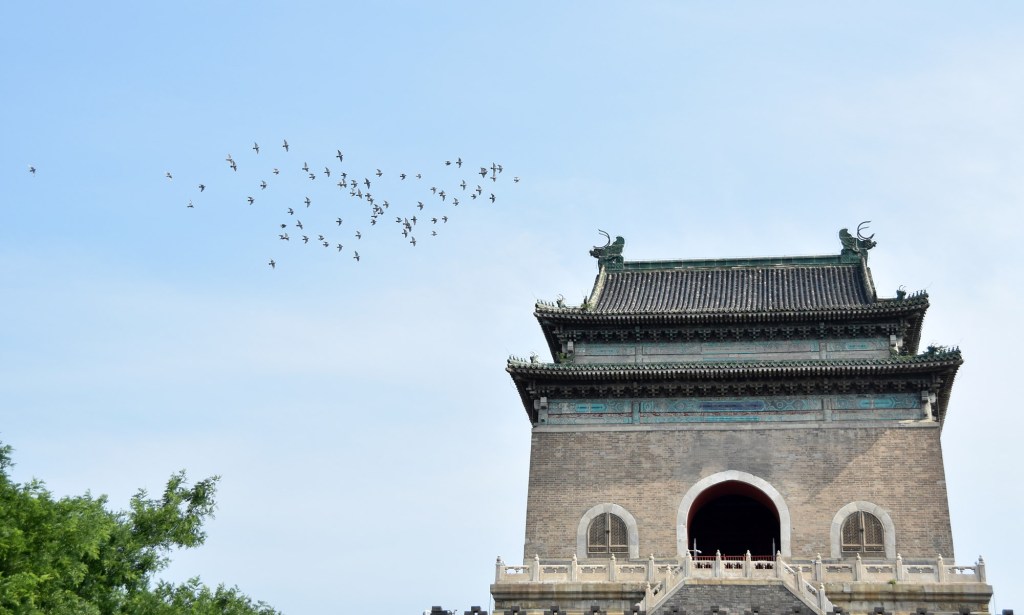
A classic hutong scene: these red doors and lion-head doorknockers are widespread. People often leave the doors open, allowing you to glimpse the communal courtyard houses inside.
© Andrew Brown/2024/China

My favourite place to photograph in Beijing is the historic hutongs (alleyways) in the old town. Originally built by the Mongolian Yuan Dynasty in the Thirteenth Century, these narrow passages are filled with stone and tiled courtyard houses that once housed servants of the imperial palace and their families. Plain grey brick walls are interspersed with bright red doors with grinning lion head knockers and banners with good luck sayings on them in elegantly-painted Chinese characters. Behind these are courtyard houses, where several families or generations live communally. In the summer, older men hang around the doorways with their t-shirts rolled up over their stomachs in the so-called “Beijing bikini”, while brightly coloured birds chirp from overhead cages, hung below the eaves of houses.

Continue reading “Photos: Beijing’s historic hutongs”

Photos: morning alms giving, Laos

A line of monks pass locals seated outside the entrance to Wat Nong Sikhounmuang temple. Each monk gets a handful of rice in their bowl.
© Andrew Brown/2024/Laos

On my last morning in Laos, my alarm went off at 5am. I’d spent the last week visiting UNICEF nutrition projects in rural Nan District during the hottest month of the year, and I was very tempted to hit snooze and go back to sleep. However, I also knew that if I did, I’d beat myself up about it later. So I dragged myself out of bed, grabbed my camera, and headed out to the front of my hotel, where I got a tuk-tuk through the gradually lightening streets to the main temple district of Luang Prabang. My objective was to see Tak Bat, or the morning alms giving ceremony, which I’d first witnessed a decade before, during my first time living and working in Asia.

Continue reading “Photos: morning alms giving, Laos”

Photos: dry season at Nairobi National Park

Ostrich walk across the dried out grassland of Nairobi National Park, with the city skyline behind them
© Andrew Brown/2023/Kenya

We visited Nairobi National Park in mid-March, towards the end of the dry season and during a prolonged drought. Over the previous three months, the unforgiving sun had wrung the last drops of moisture out of the vegetation. The grass, where it remained at all, had turned into dry yellow straw. This was clearly affecting the herbivores, which were weak from lack of food and easy prey for predators. Like in Amboseli, we saw lots of dead animals lying by the roadside – some eaten, others left almost untouched. The lions, however, looked well-fed and the vultures were numerous.

Continue reading “Photos: dry season at Nairobi National Park”

Photos: Amboseli at Christmas

A masked weaver bird constructing a nest from long blades of grass above our swimming pool.
© Andrew Brown/2022/Kenya

I’ve written about Amboseli National Park before, including during the dry season. This time, we visited at Christmas on a last minute deal, having cancelled plans to visit Hong Kong. As this was our third visit, I took less photos, but got some amazing shots from our safari camp, Tawi Lodge, which is situated right next to a watering hole. You can be having lunch or a swim and suddenly notice giraffes or an elephant wandering over for a drink or mud bath. We were also there during weaver bird nesting season. These birds like to construct their nests over lakes or swamps, as the water makes it harder for predators to approach – and our swimming pool seemed to work just as well. Fimally, there was an extended family of mongoose living under the wooden decking, who would come out in the early morning and late afternoon to dig for food.

Continue reading “Photos: Amboseli at Christmas”

Photos: Nairobi National Park

Nairobi National Park is one of the few places in the world that you can see wild giraffes and skyscapers at the same time.
© Andrew Brown/2022/Kenya

Nairobi National park is a unique safari experience just across the road from Nairobi’s Central Business District, and 40 minutes drive from our house. We stayed at Ololo Lodge, a beautiful farmhouse and safari lodge on the opposite side of the park. It was also directly under the flight path for JKIA international airport, so jumbo jets would frequently thunder past overhead. At 120 square kilometres, the park is not very big compared to others in Kenya, and even at Ololo, you can see the tops of the tallest buildings in Nairobi. There is also a raised railway line that bisects the park, although animals move freely beneath it.

Continue reading “Photos: Nairobi National Park”

Photos: Amboseli in the dry season

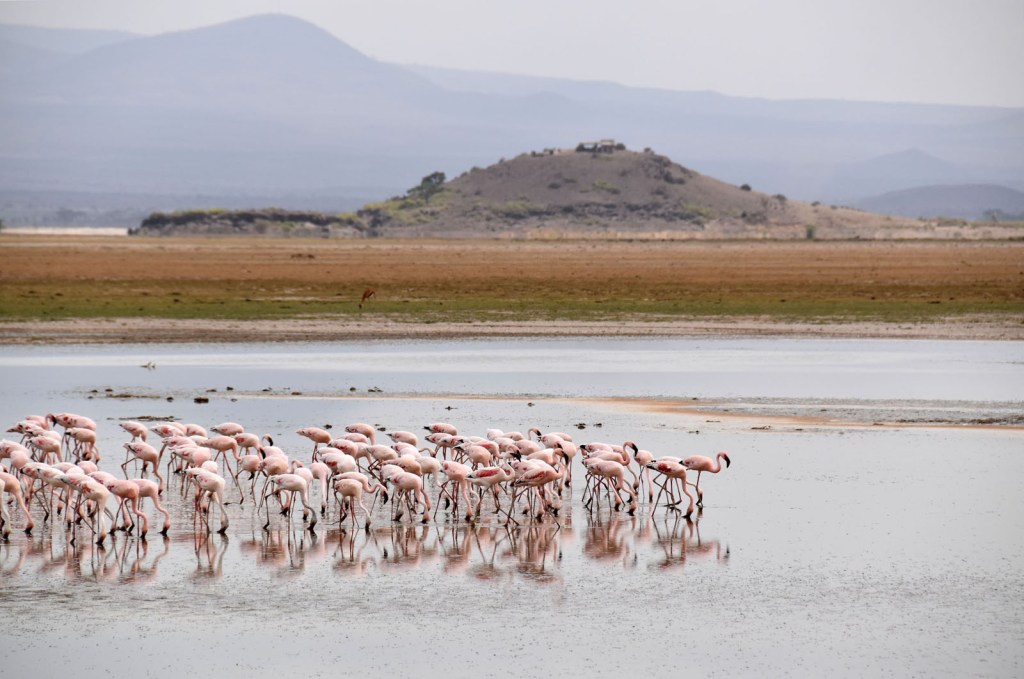
Flamingos eating algae in the reduced Lake Amboseli, with Observation Hill behind.
© Andrew Brown/2022/Kenya

Our second visit to Amboseli National Park came in October, towards the end of the dry season. The contrast with our first visit in April was stark: the green grass had dried, shriveled and turned yellow; it was hot and dry, with regular dust storms twisting their way across the parched landscape; and the lake had shrunk noticeably, although it was still large enough to sustain a small flock of flamingos. Elephants drank swampy water amongst dead trees and hungry baboons tried to grab snacks from passing safari cars. Most disturbingly, the plain was littered with the carcasses and skeletons of dead wildebeest, zebras and other animals. Vultures and hyenas were thriving on this macabre buffet, but there were so many dead animals that the scavengers had mostly had their fill and many carcasses were left untouched. This is why Amboseli literally means ‘dusty and salty’ in the local Maasai language.

Continue reading “Photos: Amboseli in the dry season”

Photos: Amboseli National Park

Pink flamingos wade through a reflection of Mount Kilimanjaro in Amboseli National Park.
© Andrew Brown/2022/Kenya

Every safari in Kenya has its own distinctive feature. Amboseli National Park is characterized by the dramatic views of snow-capped Mount Kilimanjaro, the highest mountain in Africa, which lies just over the border in Tanzania. It’s a photographer’s dream – you can capture a wide array of wildlife with the mountain rising out of the clouds in the background. Near the airstrip is the seasonal Amboseli Lake, which in rainy season also provides reflections. The park is just a 40 minute flight from Wilson Airport in Nairobi. Flying towards the mountain just after sunrise in a 12-seater plane is an experience in itself.

Continue reading “Photos: Amboseli National Park”

Photos: Wildlife of Maasai Mara

Naserian the cheetah, looking for prey from the vantage point of a termite mound
© Andrew Brown/2021/Kenya

I’ve visited the Maasai Mara three times so far during my time in Kenya, and been blown away by the experience each time. It’s the only place where I’ve seen a cheetah kill, watched the great wildebeest migration or had a sunset beer a few metres away from a sleeping crocodile. On two trips, we benefitted from a genuine Maasai guide, Moses, who grew up in the area and knows the landscape and wildlife intimately. And one of the very few up sides of the COVID-19 pandemic is that the animals were thriving and there were very few visitors, aside from a few Nairobi residents like us, so it often felt like we had the whole national park to ourselves.

Continue reading “Photos: Wildlife of Maasai Mara”

Photos: On the waterfront at Sunda Kelapa

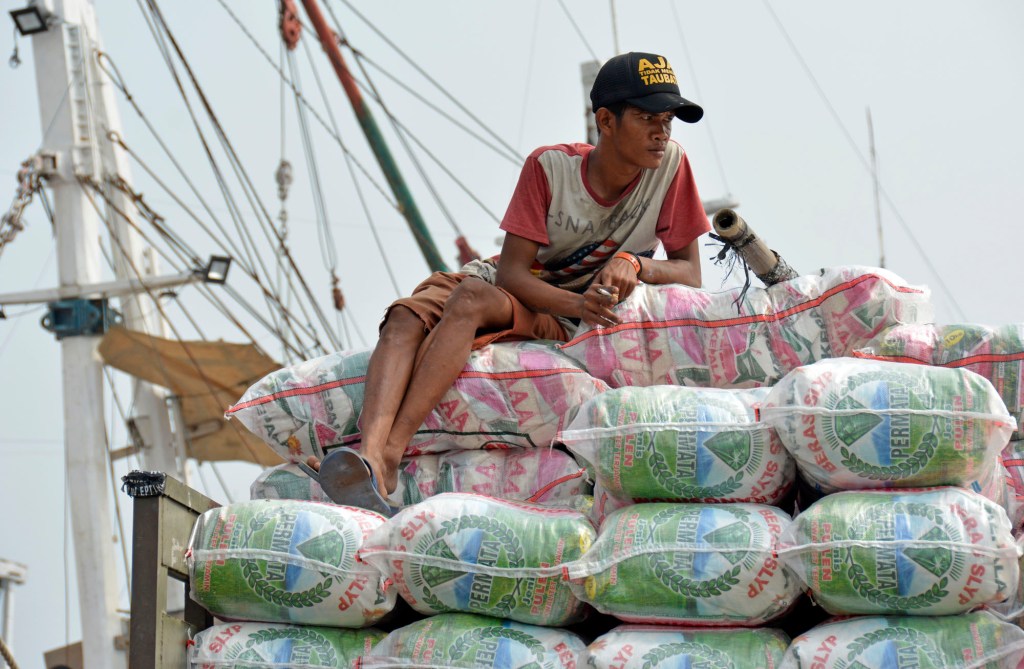
A dock worker takes a cigarette break on top of a pile of rice sacks
© Andrew Brown/2019/Indonesia

I first visited Indonesia ten years ago, when I was based in UNICEF’s Asia-Pacific regional office in Bangkok. At the time, I was blown away by the country. Even Jakarta, mostly known as a characterless urban sprawl, impressed me with its little known gems such as the old docks at Sunda Kelapa. I was fortunate to make a local friend, Charlie, who took me there one weekend at sunrise to photograph the wooden boats loading up with cargo. I wrote about the experience at the time in my previous blog.

Continue reading “Photos: On the waterfront at Sunda Kelapa”

Photos: People of Malawi

Chanthunthu village Kasungu edit v2
The Headmaster of a school in Kasungu, where UNICEF launched a drone testing corridor
© UNICEF Malawi/2017/Andrew Brown

While most of my photography for UNICEF focuses on children, I’ve also taken portraits of the adults who work with and care for them in schools, health centres and elsewhere. Malawians are generally friendly and welcoming and make good subjects for photos. Older people in particular have faces full of character, although unlike children they take photos very seriously and have to be coaxed into providing a smile. People dress very smartly, like the headmaster above, even if they live in remote rural areas without water or electricity. Continue reading “Photos: People of Malawi”