
© UNICEF China/2025/Li Feifei
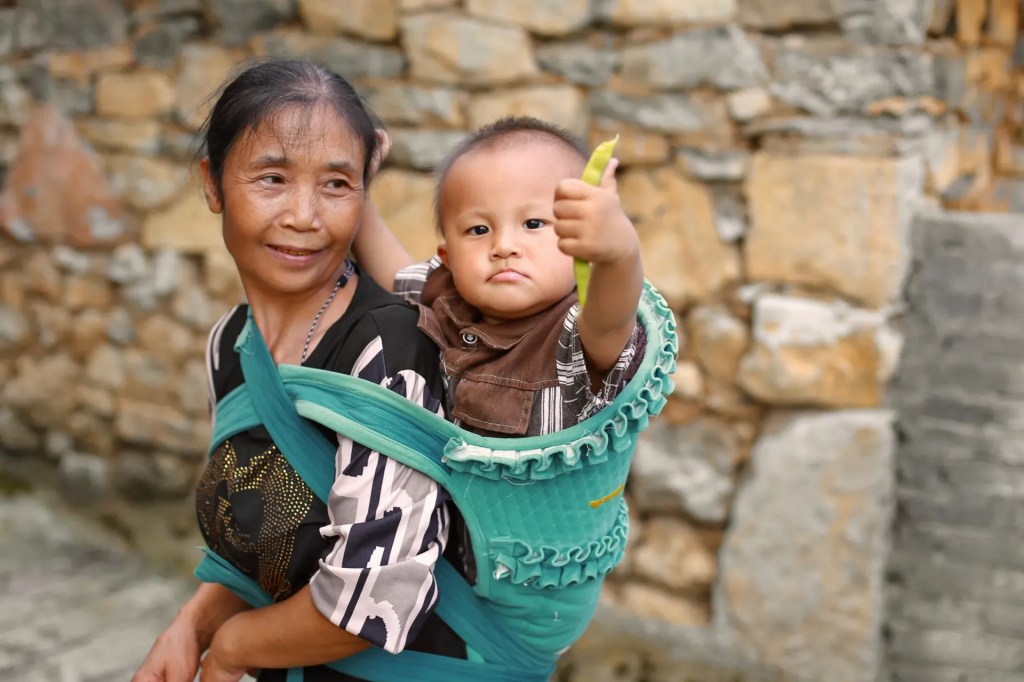
Zhaozhao, 1 year 8 months, lives with his grandmother Wang Zhifen, 59, in rural Zhijin County, Guizhou Province. Their family home is built on a hillside terrace above a small maize and bean field. Below this, the ground plunges steeply into a deep valley. On the far side, a sheer rocky cliff rises beneath some of Guizhou’s distinctive conical karst hills. A loud buzz of crickets fills the early morning air, punctuated by the distinctive call of a cockerel.
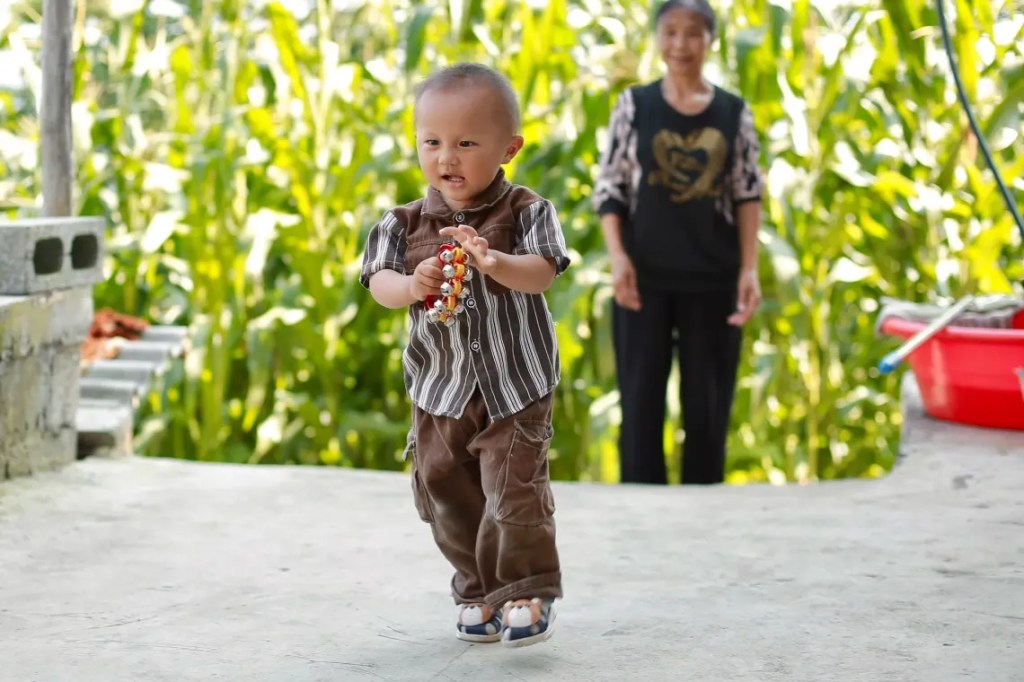
Wang Zhifen straps her grandson onto her back in a baby carrier and makes her way down the steep slope into the field. She checks the vines and picks the ripe beans, passing one back to Zhaozhao, who plays with it happily. After collecting a full bowl, she returns home. When they get back to the terrace, Zhifen unstraps the carrier and encourages Zhaozhao to walk by himself. “Let’s go!” she says. Zhaozhao crawls up the steps, stands at the top, and walks steadily across the yard. He stops to pick up and shake a colourful toy rattle.
This is far cry from Zhaozhao of eight months ago, captured in video footage from an assessment at the local hospital. At that time, he couldn’t walk or even stand on his own. There was very little interaction between him and his grandmother. He was suffering from multiple developmental delays. If untreated, this can lead to permanent disability.
Wang Zhifen has taken care of Zhaozhao since he was born. “His father is away working in Guiyang city, and his mother has health issues, so I look after him on my own,” she says. “It’s hard for me to do the housework, feed the chickens, do the farming, and also take care of a young child. I feel exhausted all the time.”
“Zhaozhao used to have problems standing and walking,” she continues. “He still cannot talk. When he’s happy, he can understand some of what I say. But sometimes he has a bad temper, and I don’t know what to do.”
© UNICEF China/2025/Li Feifei
Health care support
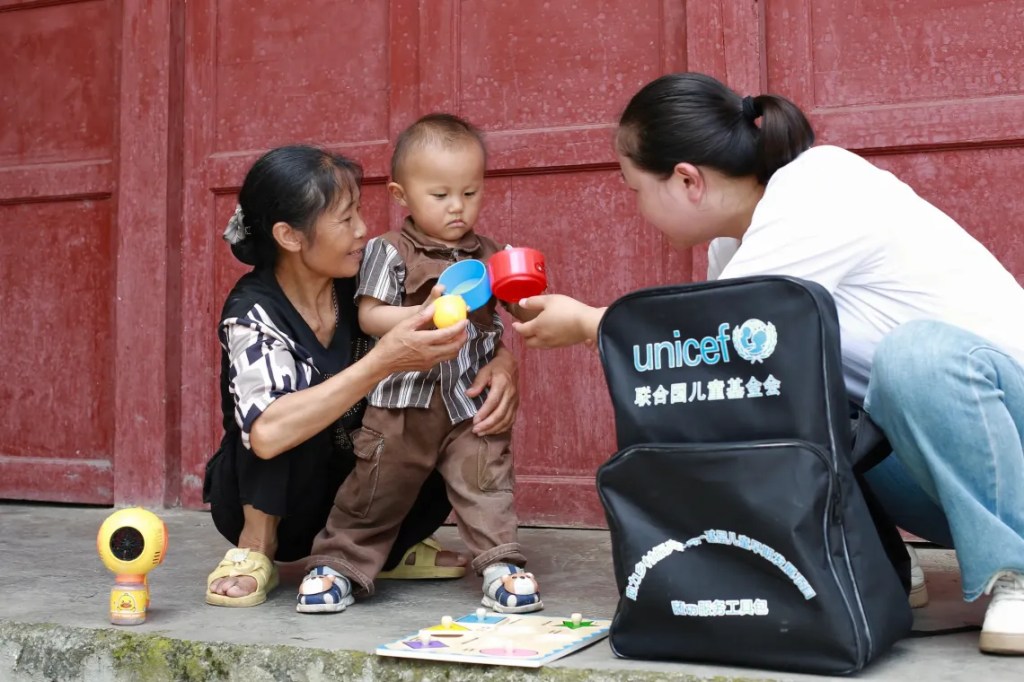
Luckily, Zhaozhao’s condition was picked up by health workers at nearby Nayong Township Hospital, which is part of the Early Childhood Development (ECD) programme run by the National Health Commission and partners, with support from UNICEF. The hospital uses regular health check-ups to screen for children at risk of development delays or disability, and to look out for other parenting risk factors such as children who have been left behind with grandparents. Once a child is identified, village health workers support the caregiver.
“A lot of grandparents in this village still think that if a child is not sick, can eat and sleep, then it’s okay,” says Dr Huang Chengling from the township hospital. “They don’t think it’s important to interact with the child or play games, or know that this is critical for their intellectual development.”
Dr Huang was one of the health workers assigned to work with Zhaozhao’s family. “When we did the screening at his one-year check-up, we found that he couldn’t stand up, even with support,” she continues. “We also found developmental delays in his fine motor skills – he couldn’t hold small objects with two fingers.”
Dr Huang now gives Zhaozhao regular check-ups at the hospital, visits the family at home to check on his progress, and encourages Wang Zhifen to attend regular care group sessions at the hospital. Through these interventions, she provides guidance to Zhifen on responsive caregiving.
“Because of her household chores and farmwork, Zhifen was carrying Zhaozhao on her back most of the time,” Dr Huang says. “I advised her to put him down and let him exercise. He can learn how to stand by holding on to a stool. I also advised her to keep talking to him, even while she’s cooking or cleaning. You don’t need a specific session for this.”
With the right guidance, things have improved. “By month 15, Zhaozhao could stand up with support,” Dr Huang says. “By month 17, he could walk by himself. Now we’re focusing on communication and fine motor skills.”
© UNICEF China/2025/Li Feifei
Left-behind children
Zhaozhao’s case is far from unique. There are many children left behind in Zhijin County, and across rural western China. Here, parents often migrate for work in cities, leaving young children with their grandparents. Yet the first three years of life are the most crucial for their physical and brain development. During this time, children need nurturing care in order to reach their full potential. This includes good health, adequate nutrition, early stimulation and responsive caregiving.
“Many parents in central and western regions work away from home and children are often cared for by grandparents,” UNICEF China ECD Programme Officer Niu Hongfeng explains. “They are relatively lacking in scientific parenting knowledge and skills and cannot fully ensure their children’s early childhood development.”
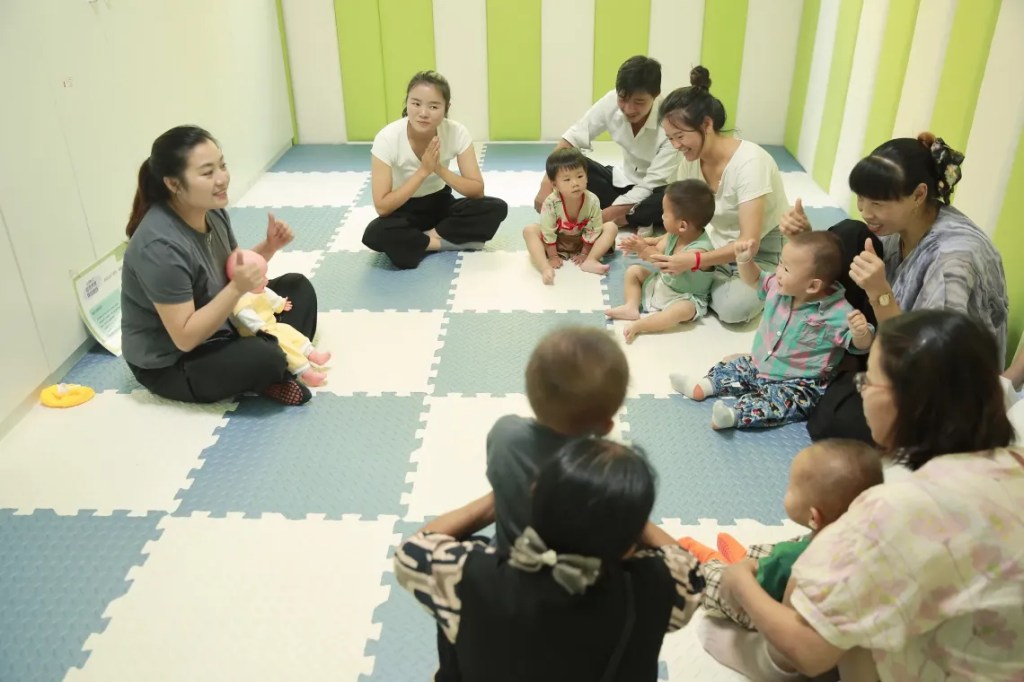
UNICEF’s Early Childhood Development programme provides part of the solution. “We encourage grandparents to participate in care group activities,” Hongfeng says. “Facilitators teach them better approaches, through sessions such as parenting practices sharing, parent-child activities and health education. If needed, village doctors provide follow-up and home visit support.”
Health workers are also trained to identify and respond to development delays. “We use a warning sign checklist to screen for children at risks of developmental delay or disability,” Hongfeng says. “The health workers also assess the parenting behaviours and risks of caregivers and provide counselling and guidance. Children who do not show improvement are referred to higher-level healthcare facilities.”
© UNICEF China/2025/Li Feifei
Learning to play
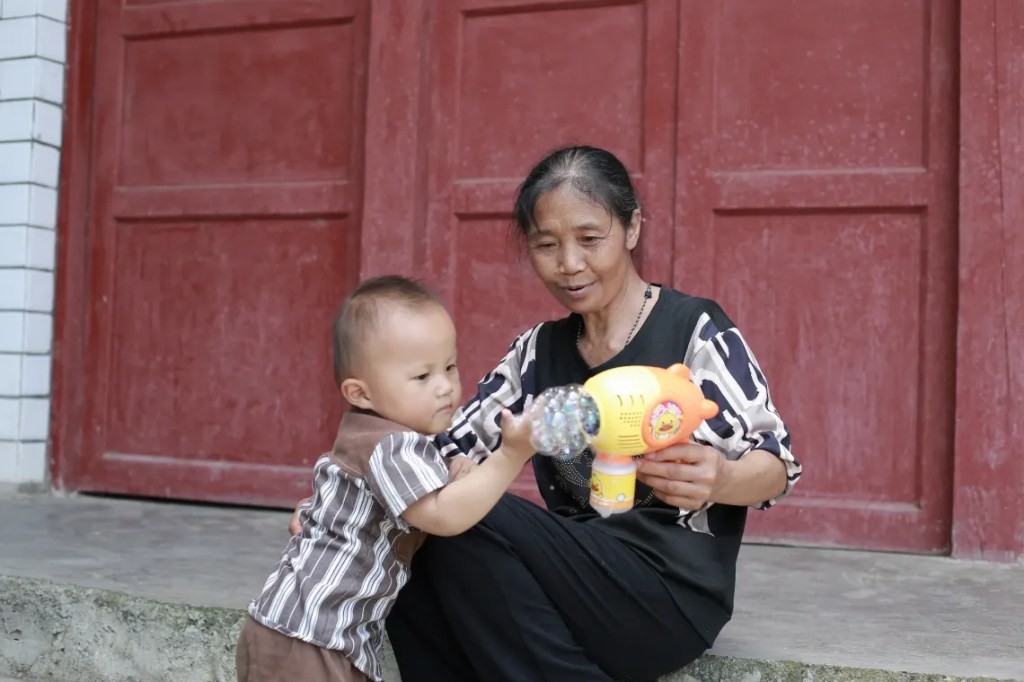
Back at the family home, Dr Huang gives Wang Zhifen an orange bubble gun with a picture of a cartoon duck on the side. She shows her how to make soap bubbles, which float across the patio, glistening in the morning sun before they pop against a wall or the ground. Zhaozhao immediately becomes interested. He tries to catch a few bubbles and then explores the gun itself, investigating where the bubbles come out and how to make them pop. Wang Zhifen encourages him.
It’s a simple game, familiar to many parents, but provides an important opportunity for interaction and to practice the fine motor skills young children need to develop.
“The health workers came to our home and helped me teach Zhaozhao how to walk,” Wang Zhifen says. “When we go to the care group at the hospital, he is happy playing with toys. I found it quite interesting and it’s a relief for me during the sessions.”
When Zhaozhao finally learned to walk, Zifen recorded the moment on her phone and shared it with relatives. “His father saw him walking and was happy about it,” she says. “Other family members commented and encouraged him. Now, I’m trying to teach him to say mum, dad, grandpa and grandma. My hope for Zhaozhao is that he will grow up healthy.”
For Dr Huang, seeing Zhaozhao walk is also a personal achievement. “The training from UNICEF helped me improve my professional skills,” she says. “In the past, I just did diagnosis and treatment. But now I can promote ECD knowledge and skills to caregivers and help them improve their practice at home.”
“I feel very happy to help children like Zhaozhao who have development delays to catch up,” she concludes. “It makes me feel a sense of fulfilment.”
© UNICEF China/2025/Li Feifei


